

I didn’t want to die. But I didn’t know how to live.
That’s not something I could admit at first—not to my friends, not to my family, not even to myself. But I felt it. In my bones. In the way I dragged myself through days that never got easier. In the way I disappeared inside my own head, even when people were talking to me.
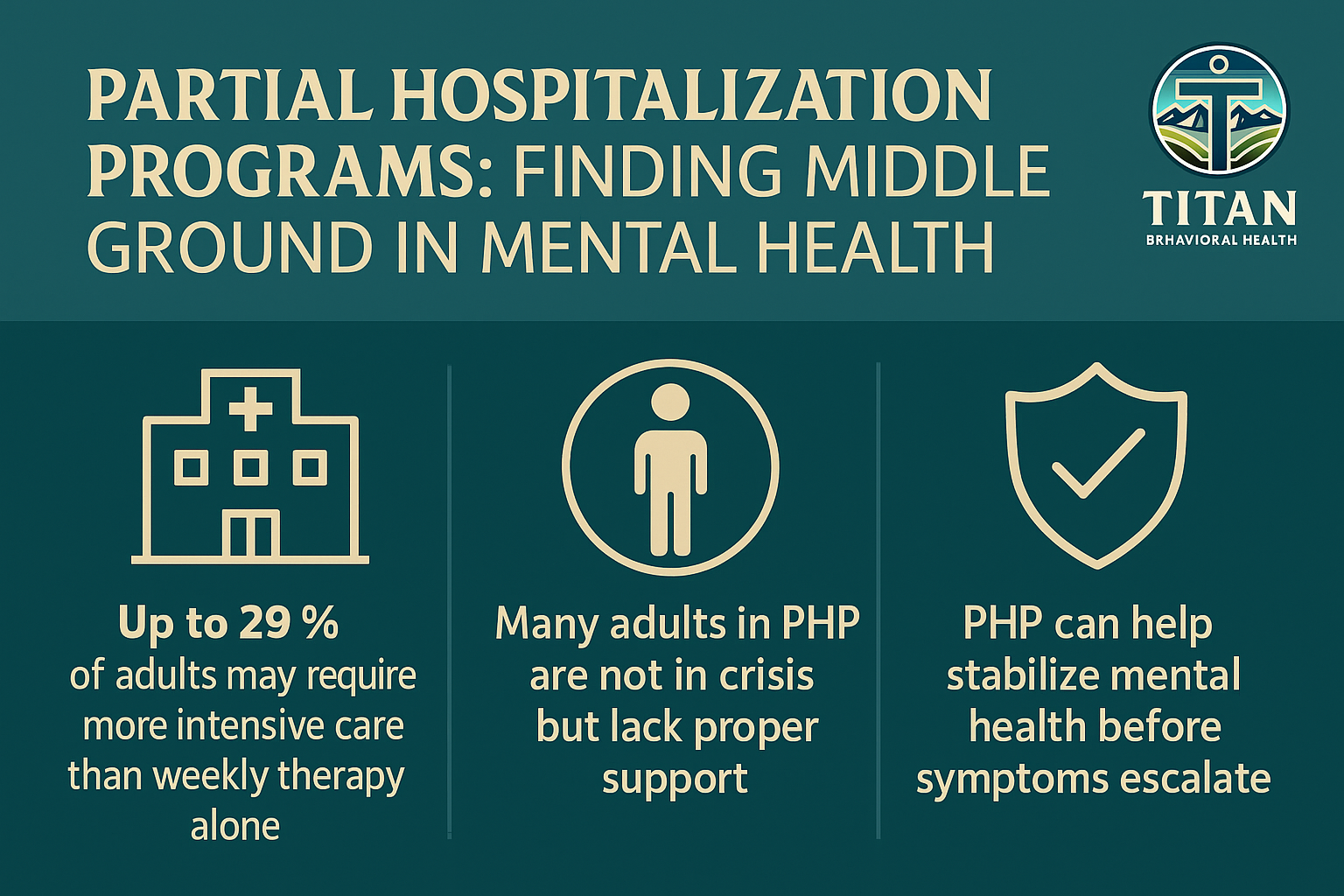
When I finally reached out for help, I didn’t end up in a hospital. I landed somewhere in between. A place called a partial hospitalization program.
It wasn’t what I expected. It was better.
There’s a Middle Ground Between “Crisis” and “Coping”
You don’t have to be actively suicidal to feel like life isn’t working. That was me.
I could show up to work, sort of. I could smile at the right times. But inside, it felt like I was barely holding the pieces together. I wasn’t in danger—at least not in a way that anyone could see. But I wasn’t okay, either.
And that’s the part no one talks about.
There’s this dangerous in-between space where people are struggling deeply but still “functioning enough” to fly under the radar. We call it high-functioning depression or silent suffering. But mostly, it just feels like being invisible.
A partial hospitalization program (PHP) gave me a place where I didn’t have to pretend anymore.
What Partial Hospitalization Looks Like (And What It Doesn’t)
When I first heard the term, I pictured something sterile and intense—hospital beds, locked doors, heavy silence. I was wrong.
PHP at Titan Recovery Centers wasn’t a hospital. It was a structured, day-based program that allowed me to receive intensive mental health support while still going home at night. I came during the day—five days a week—and returned to my apartment in the evenings. No white coats. No judgment. Just real support.
Here’s what it looked like:
- Daily group therapy that gave structure to my day
- One-on-one sessions with a licensed therapist who really listened
- Skills-based learning to help me cope with thoughts I didn’t know how to talk about
- A community of people who didn’t need me to explain everything—they just got it
And most important: space to heal without pressure to “bounce back.”
Why I Needed More Than Weekly Therapy
Therapy helped. Kind of.
I’d been doing weekly therapy for a while before PHP. It helped me hold the line, but it didn’t move me forward. I’d leave sessions feeling like I’d said all the right things but still came home to the same dread, the same spirals, the same quiet numbness.
I didn’t need a bandaid. I needed time. Space. Tools.
Partial hospitalization gave me time to unravel and reweave. It wasn’t magic—but it was movement.
The Lies I Told Myself Before Reaching Out
Before I agreed to the program, I told myself all the reasons I shouldn’t:
- “Other people have it worse.”
- “It’s not that bad.”
- “I should be able to handle this.”
- “If I go, it means I failed.”
But those weren’t truths. They were the lies depression tells to keep you stuck.
Here’s the truth: You don’t have to wait until you break to deserve help.
What Healing Looked Like—One Quiet Shift at a Time
I didn’t have a breakthrough. I had breakfast.
I sat at a table with strangers and drank coffee and talked about shame. I cried in group therapy because someone else said the thing I couldn’t. I walked outside on a lunch break and realized the sun felt warm on my skin—and that mattered.
The healing didn’t come in grand gestures. It came in:
- Getting out of bed before noon.
- Texting back without guilt.
- Letting someone see me when I wasn’t okay.
It was subtle, but it stuck.
You’re Not Too “Okay” for Help
If you’re like I was—technically functioning, internally exhausted—PHP might feel like overkill.
It’s not.
It’s a pause. A holding space. A place to catch your breath without falling apart first.
Titan’s partial hospitalization program in Las Vegas meets people right in that “not quite rock bottom” space. You don’t need to hit crisis to qualify. You just need to be willing to say, I can’t keep doing it like this.
That’s enough.
Is a Partial Hospitalization Program Right for You? (FAQ)
What is a partial hospitalization program?
A partial hospitalization program (PHP) is a structured mental health treatment plan where you attend therapy and support sessions during the day and return home at night. It’s more intensive than traditional outpatient therapy but doesn’t require overnight stays.
Who should consider PHP?
PHP can be a good fit if:
- You’re struggling with depression, anxiety, or suicidal thoughts but aren’t in immediate danger
- Weekly therapy isn’t enough support
- You’re coming out of a hospital stay and need a step-down program
- You want help but don’t need 24/7 care
Do I have to be in crisis to go?
No. That’s one of the biggest misconceptions. PHP is often most effective before things get worse. It’s about stabilizing, learning, and reconnecting—not waiting for collapse.
How long does a PHP last?
Programs vary, but most last several weeks. Titan Recovery Centers’ PHP in Las Vegas typically runs Monday through Friday, several hours per day, with tailored lengths based on your needs.
Can I work or go to school while in PHP?
It depends on your schedule. Some people adjust work or school obligations temporarily. Titan’s team can help you create a plan that balances care with life responsibilities.
If You’re Still Here, You’re Not Alone
You might not want to die. You might just not want to feel like this anymore.
That’s a powerful place to start.
At Titan Recovery Centers in Las Vegas, our partial hospitalization program offers the kind of support that meets you where you are—between surviving and healing, not quite falling apart, but far from okay.
You don’t have to be worse to want better.
Take the next step toward quiet, steady healing.
Call (888) 976-8457 or visit to learn more about our partial hospitalization program services in Las Vegas, Nevada.
