

I had the years. The milestones. The story that sounds good in a meeting.
And I was quietly disconnected.
Not relapsing. Not spiraling. Just flat. I kept telling myself this was “normal long-term sobriety.” When I finally looked into EMDR therapy, it wasn’t because I was falling apart. It was because I was tired of living halfway awake.
If you’re long-term sober and something still feels off, this is for you.
I Was Sober — But Emotionally Guarded
From the outside, I looked solid.
I showed up. I worked the steps. I mentored others. I knew how to talk about gratitude and growth.
Inside, though, I felt like I was operating behind glass.
I wasn’t in pain exactly. I just wasn’t fully present. I kept thinking, Is this as good as it gets?
That thought scared me more than relapse ever did.
Because I didn’t want to admit I was still struggling after all this time.
Sobriety Removed The Substance — Not The Residue
Here’s what I misunderstood for years:
Getting sober stopped the chaos.
It did not automatically process the trauma.
I had done therapy. I had talked about my childhood. I could explain my triggers intellectually.
But certain reactions still didn’t match the moment.
A tone shift in someone’s voice would send me into shutdown.
Conflict felt threatening even when it wasn’t.
Criticism lingered for days.
I thought that was just my personality.
Turns out, it was unprocessed trauma still sitting in my nervous system.
Trying EMDR Felt Like Admitting I Wasn’t “Done”
When someone suggested EMDR, I resisted.
Part of me thought: If I need trauma therapy this far into sobriety, did I miss something?
There’s a quiet pressure among long-term alumni to be stable. Grounded. Solid.
We’re not supposed to be the ones who still feel hollow.
But here’s what shifted for me: healing isn’t a one-time event. It’s layered.
EMDR didn’t mean I failed recovery.
It meant I was ready for the next level of it.
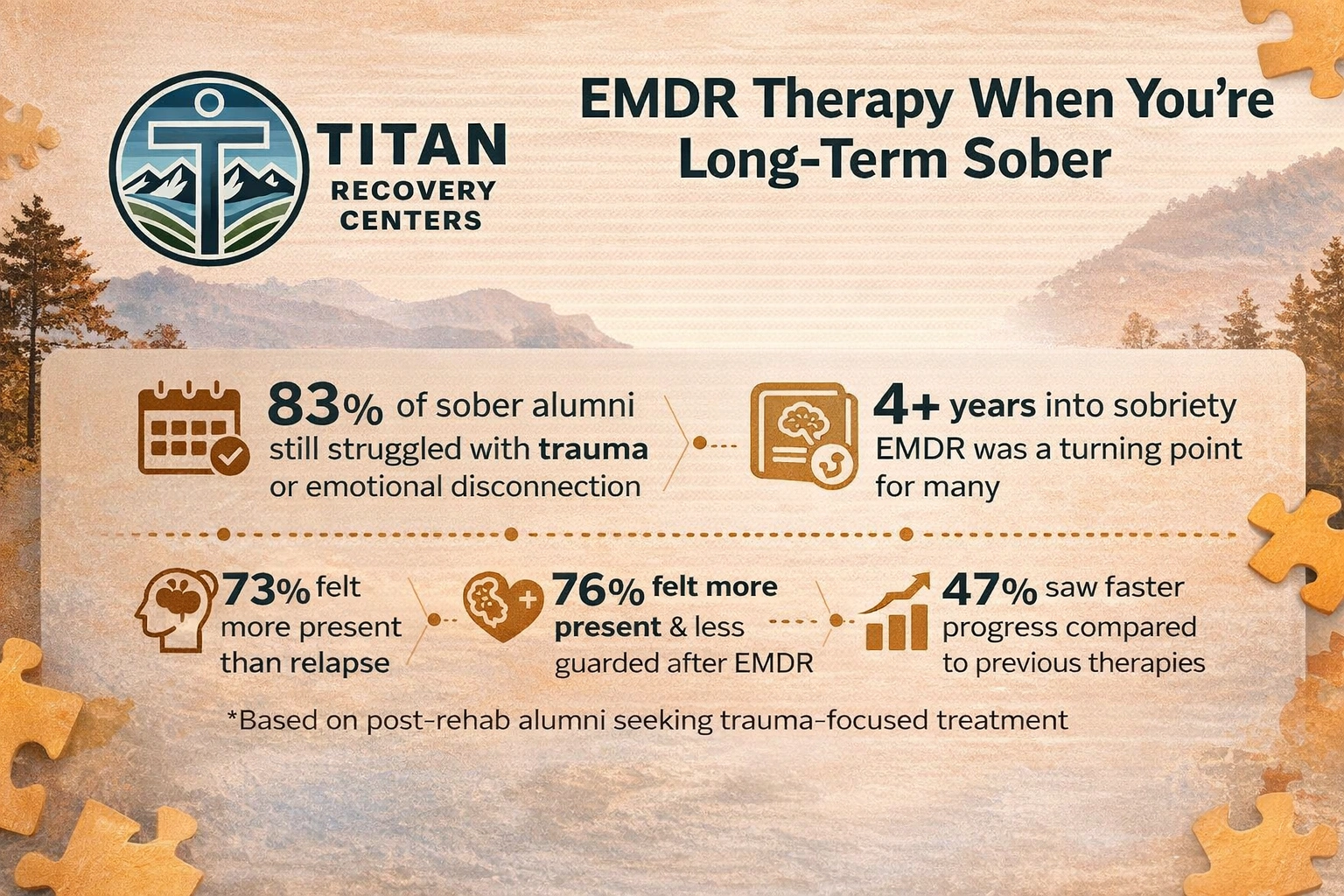
EMDR Worked Where Insight Couldn’t
I had insight. Plenty of it.
I knew my patterns. I knew my wounds. I could trace behaviors back to their origins.
But my body didn’t care about my understanding.
EMDR works differently. It uses bilateral stimulation—eye movements, tapping, or tones—to help your brain reprocess memories that were stored in survival mode.
You don’t relive everything in detail. You don’t drown in it.
You process it.
And that distinction matters.
Memories that once felt sharp started to feel… neutral. Not erased. Just integrated.
It was like turning down the volume on something that had been humming in the background my entire life.
I Realized I Had Been Surviving — Even While Sober
This was the hardest truth.
I wasn’t using substances anymore, but I was still surviving emotionally.
I avoided vulnerability.
I stayed useful instead of intimate.
I kept relationships safe and surface-level.
Sobriety had stabilized me. But EMDR helped me soften.
After several sessions, I noticed I wasn’t bracing the same way. Conflict didn’t feel catastrophic. Emotional conversations didn’t feel like free-falling.
I didn’t become a different person.
I became less defended.
Why Long-Term Alumni Get Stuck
Nobody talks about this part enough.
The plateau.
The quiet disconnection.
The feeling that you should be happier than you are.
Long-term sobriety creates space. And once the chaos quiets down, the deeper layers become visible.
Old relational wounds. Subtle shame. Developmental trauma that never fully processed.
That doesn’t mean your recovery is fake.
It means you are stable enough to go deeper.
For many alumni in Henderson, Nevada, integrating trauma-focused therapies into ongoing recovery has helped shift them from maintenance mode into meaningful growth. And for those in North Las Vegas, Nevada, accessing EMDR within a structured treatment environment has allowed them to address what years of sobriety alone didn’t resolve.
Going deeper is not regression.
It’s refinement.
What EMDR Actually Felt Like
I expected it to be intense. Maybe overwhelming.
Instead, it felt structured.
Sessions began with grounding. We targeted specific memories. Bilateral stimulation helped my brain make new connections.
Sometimes emotions surfaced. Sometimes insights did.
But what I noticed most was what happened outside the sessions.
Triggers softened.
Shame didn’t stick as long.
I responded instead of reacted.
It wasn’t dramatic. It was steady.
And steady is something I didn’t know I was allowed to want.
The Shift From Maintenance To Growth
Before EMDR, sobriety felt like upkeep.
After EMDR, sobriety felt like expansion.
I started laughing more easily. Feeling sadness without spiraling. Letting people see more of me.
The difference was subtle but powerful.
I stopped pretending I was fine.
I started actually being fine.
FAQs About EMDR For Long-Term Alumni
Is EMDR Only For People In Crisis?
No. EMDR is often most powerful for individuals who are stable but feel stuck or emotionally disconnected. You do not need to relapse to justify deeper healing.
Will EMDR Undo My Sobriety Foundation?
No. EMDR builds on your existing recovery. It addresses trauma that may still influence your reactions without destabilizing your sobriety.
How Long Does EMDR Take?
It depends on your history and goals. Some memories process in a few sessions. More complex patterns may require longer work. Treatment is individualized.
What If I’ve Already Done Trauma Work?
Many alumni have. EMDR often feels different because it works at the nervous system level, not just through discussion and insight.
Will It Make Things Worse Before They Get Better?
Temporary emotional activation can happen, but sessions are structured to maintain stability. Preparation and grounding come first.
Is It Too Late In My Recovery To Try EMDR?
There is no “too late.” Many long-term alumni find EMDR years into sobriety when they’re ready for deeper emotional work.
If You’re Quietly Pretending
Maybe you haven’t told anyone you feel stuck.
Maybe you’re afraid it will make people question your growth.
But pretending to be fine when you’re not is exhausting.
Long-term sobriety is not the finish line. It’s the foundation.
If you feel stable but not fully alive, that’s not ingratitude. It’s insight.
You do not have to wait for a crisis to deserve more.
You can choose deeper healing now.
Call (888) 976-8457 to learn more about our EMDR Therapy in Las Vegas, Nevada.
