

There’s a moment some people reach in recovery that rarely gets talked about out loud.
It’s not the beginning, when everything feels chaotic.
It’s not a crisis either.
It’s quieter than that.
Someone might be sober. They might be showing up to therapy, doing the work, trying to rebuild their life. But underneath all that effort sits a small, uncomfortable question:
What if getting better slowly erases the parts of me that mattered most?
I hear this fear often as a clinician. Creative people, sensitive people, people who feel deeply or connect easily with others sometimes worry that sobriety will flatten them. That the intensity that once fueled their personality, humor, art, or social energy will disappear.
But recovery isn’t meant to take your identity away. It’s meant to help you live inside it safely.
Sometimes, though, the path gets complicated. When anxiety and substance use become tangled together, people may need additional emotional tools to move forward without feeling like they’re losing themselves.
Here are several signs your healing process might need more support right now.
When Sobriety Starts to Feel Like It’s Shrinking You
One of the most painful fears people carry into recovery is the idea that sobriety will make life smaller.
Someone who once felt vibrant in social settings may suddenly feel awkward. A person who wrote music late at night while drinking may worry the creativity will disappear. Others simply feel like the colorful, expressive version of themselves has gone quiet.
These worries deserve to be taken seriously.
Substances sometimes become tied to emotional access. They can feel like a shortcut to vulnerability, confidence, or connection. When they leave, it can briefly feel like those qualities left too.
But in truth, those qualities were never created by substances.
They were always yours.
Recovery simply asks the nervous system to relearn how to access them without chemical help. That process takes patience, and it often requires emotional skill-building. Many individuals working through this stage seek additional therapeutic structure to stabilize emotions and rebuild confidence at the same time.
In communities such as Henderson, Nevada, clinicians often see this stage of recovery when individuals are navigating both anxiety and substance use challenges simultaneously.
It’s not a sign that healing isn’t working.
It’s a sign that healing is entering a deeper layer.
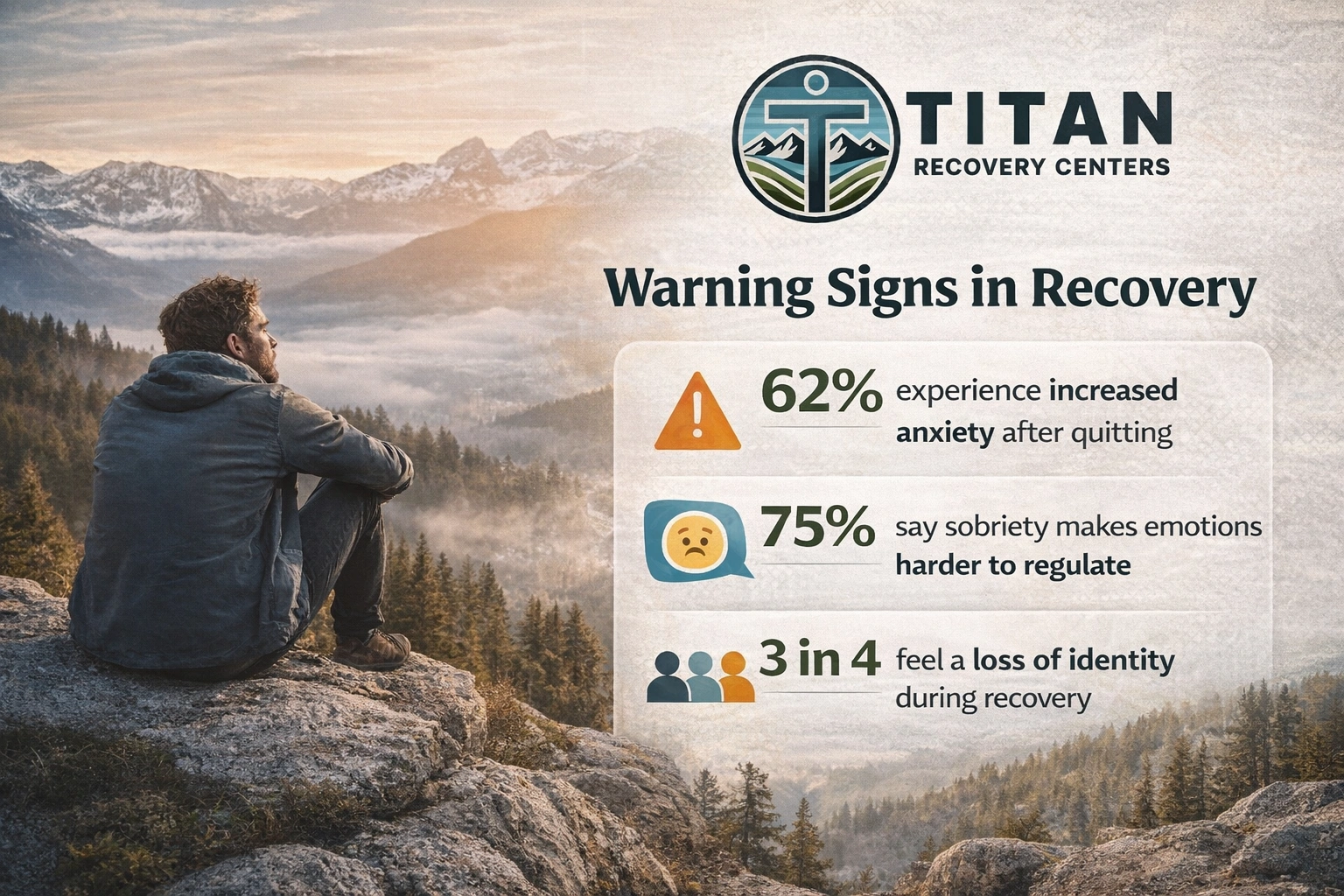
Your Emotions Feel Either Overwhelming or Completely Flat
Early recovery can create emotional whiplash.
Some days feelings rush in intensely. Anxiety, anger, sadness, guilt, and relief can all appear in the same afternoon. Other days the opposite happens: emotions feel strangely distant, almost muted.
People describe it in different ways:
“It’s like my emotions are too loud.”
“Or they’re just… gone.”
Both states can be unsettling.
Substances often acted like a volume control for the nervous system. Once they’re removed, emotions temporarily lose their regulation system. The brain hasn’t yet relearned how to balance intensity on its own.
This is where therapeutic skill development becomes incredibly valuable. Structured emotional coping strategies help people understand their feelings rather than fear them.
Instead of being flooded by emotion—or disconnected from it entirely—people gradually learn how to stay present with what they’re experiencing.
That shift can be life-changing.
Anxiety Has Quietly Taken the Place of Substance Use
Another common experience in recovery is the sudden rise of anxiety.
Substances sometimes mask anxious thoughts for years. Once they’re gone, the underlying tension becomes more noticeable.
People might start noticing things like:
- Persistent racing thoughts
- Difficulty relaxing in the evenings
- Social interactions feeling more stressful than before
- A constant sense that something bad might happen
- Trouble sleeping because the mind won’t slow down
This doesn’t mean recovery is failing.
It means the brain is recalibrating.
Anxiety often surfaces because it was there all along, quietly managed through substance use. Once substances are removed, the nervous system needs new ways to process stress and emotional discomfort.
Without those tools, anxiety can become exhausting. But with the right support, people can learn to regulate it rather than escape from it.
Over time, many individuals discover something surprising: anxiety becomes more manageable when it’s approached with curiosity rather than avoidance.
You’re Doing “All the Right Things,” But Something Still Feels Off
Many people reach a stage in recovery where they’re following every recommendation.
They attend therapy sessions.
They practice coping strategies.
They maintain sobriety.
Yet inside, something still feels tangled.
They might feel disconnected from relationships.
They may struggle with sudden emotional spikes.
Or they might experience patterns in their thinking that continue to cause distress.
When this happens, it doesn’t mean a person isn’t trying hard enough. More often, it means they need a therapeutic framework that helps organize emotional experiences in a clearer way.
This is where therapies designed to help people balance intense emotions, relationships, and identity become particularly helpful. For example, many individuals exploring deeper emotional regulation strategies find benefit in dialectical behavior therapy support.
Approaches like dbt emphasize skills that help people remain grounded during emotional intensity rather than reacting impulsively or shutting down.
Recovery becomes less about fighting feelings—and more about learning how to move through them.
A Part of You Is Afraid of Becoming “Boring”
This concern is far more common than most people realize.
Many individuals in recovery quietly wonder:
Will I still be interesting without substances?
Will people still enjoy being around me?
Will I lose my personality?
Substances can sometimes amplify parts of someone’s identity. Humor may feel quicker. Conversations may feel easier. Social anxiety might temporarily fade.
So when sobriety begins, it’s understandable that people fear losing their spark.
But personality doesn’t disappear in recovery.
In fact, what often emerges is something more authentic. People begin rediscovering humor that doesn’t rely on intoxication, creativity that isn’t fueled by exhaustion, and relationships that feel more genuine.
The process isn’t instant. Identity rebuilding takes time.
But many individuals eventually realize something powerful:
Sobriety didn’t erase them.
It revealed them.
You Feel Like You’re Rebuilding Your Identity From Scratch
Recovery often includes an unexpected stage: identity reconstruction.
When substances once shaped routines, social circles, emotional expression, and coping habits, removing them leaves space that can feel unfamiliar.
Some people describe it as learning who they are again.
This stage can include questions like:
- What do I enjoy now?
- What kind of relationships feel healthy?
- How do I handle difficult emotions without escaping them?
- What values actually matter to me?
These questions can feel intimidating. But they’re also part of a deeply meaningful phase of healing.
In places like North Las Vegas, Nevada, many people navigating recovery discover that identity rebuilding becomes easier when they’re supported by therapeutic communities that understand both anxiety and substance use recovery.
When individuals have guidance during this stage, identity development becomes less frightening and more empowering.
Recovery Doesn’t Take Your Identity — It Helps You Protect It
One of the biggest misconceptions about recovery is that it turns people into a completely different version of themselves.
In reality, recovery protects the parts of someone that were already there.
The humor.
The creativity.
The emotional depth.
The sensitivity.
Those qualities may have been hidden beneath stress, anxiety, or substance use patterns.
Recovery doesn’t erase them.
It helps people access them without the chaos that once surrounded them.
When the right emotional skills are in place, individuals often rediscover passions, relationships, and personal strengths that feel more stable than they ever did before.
Frequently Asked Questions
Is it normal to feel anxious during recovery?
Yes. Anxiety is very common when someone stops using substances. Many people previously relied on substances to manage stress or quiet their thoughts. Once those substances are removed, underlying anxiety can become more noticeable until healthier coping tools are developed.
Why do emotions feel stronger in early recovery?
Substances often dampen emotional intensity. Without them, the brain temporarily experiences feelings more strongly. Over time, emotional regulation skills help restore balance so emotions become easier to manage.
Does recovery change your personality?
Recovery doesn’t remove your personality. Instead, it allows your authentic traits to emerge without the influence of substances. Many people eventually find they feel more like themselves, not less.
What happens if anxiety and substance use occur together?
When anxiety and substance use overlap, both conditions can reinforce each other. Anxiety may lead someone to use substances for relief, while substance use can increase anxiety over time. Addressing both issues together often leads to better long-term stability.
When should someone seek additional therapeutic support?
Additional support may help when emotional swings feel overwhelming, anxiety becomes persistent, or someone feels stuck despite making progress in recovery. Structured therapeutic approaches can provide practical tools for managing emotions and rebuilding stability.
A Final Thought
One of the quiet truths about recovery is that it’s not only about stopping substances.
It’s about learning how to live fully inside your own mind again.
That process can feel uncomfortable at times. It can bring up identity questions, emotional intensity, and moments of uncertainty. But it can also lead to a deeper, more grounded version of yourself.
If the process starts to feel overwhelming, additional support can make the path forward clearer.
Call (888) 976-8457 to learn more about our Dialectical Behavior Therapy in Las Vegas, Nevada.
