

It’s not easy to admit when you’re struggling—especially with emotions that seem too big, too fast, or too confusing to handle. For many people considering therapy for the first time, the feeling isn’t total collapse—it’s quiet overwhelm. Life might look “fine” on the outside, but inside, it feels like you’re barely keeping up.
Maybe you’re not sure where to begin. Maybe you’ve tried to push through on your own, and it’s just not working anymore.
That’s where dialectical behavior therapy (DBT) can make a difference. It’s not about fixing you. It’s about giving you the tools to work with what’s already inside you—tools that help you stay grounded when things get intense, tools that help you respond instead of react, tools that help you reconnect with your life, your goals, and your emotions.
If you’ve never done therapy before—or if you’ve done it and felt like something was missing—DBT might be the structured, compassionate approach you’ve been waiting for. And at Titan Recovery Centers, it’s one of the core treatments we offer for people ready to regain emotional control.
What Is DBT and Who Is It For?
DBT stands for dialectical behavior therapy, and it was originally developed to help people experiencing extreme emotional dysregulation—especially those dealing with self-harm, mood instability, or interpersonal chaos. But over time, DBT has evolved into something much broader.
Today, DBT supports anyone who struggles with:
- Overwhelming emotions
- Intense mood swings
- Difficulty with boundaries or communication
- Shutting down emotionally
- Impulsive behavior in response to stress
- Trouble feeling safe in relationships
If you’ve ever felt like your emotions are “too much,” or like you’re constantly bouncing between numbness and overload, DBT might help you find a more stable middle ground.
And no—you don’t have to hit rock bottom to benefit from it. Many people in Spring Valley, Nevada and beyond have turned to DBT not because they were in crisis, but because they were tired of feeling emotionally out of sync.
What Makes DBT Different?
Unlike traditional talk therapy, DBT is skills-based. That means it teaches you how to respond to your emotions, not just why you have them.
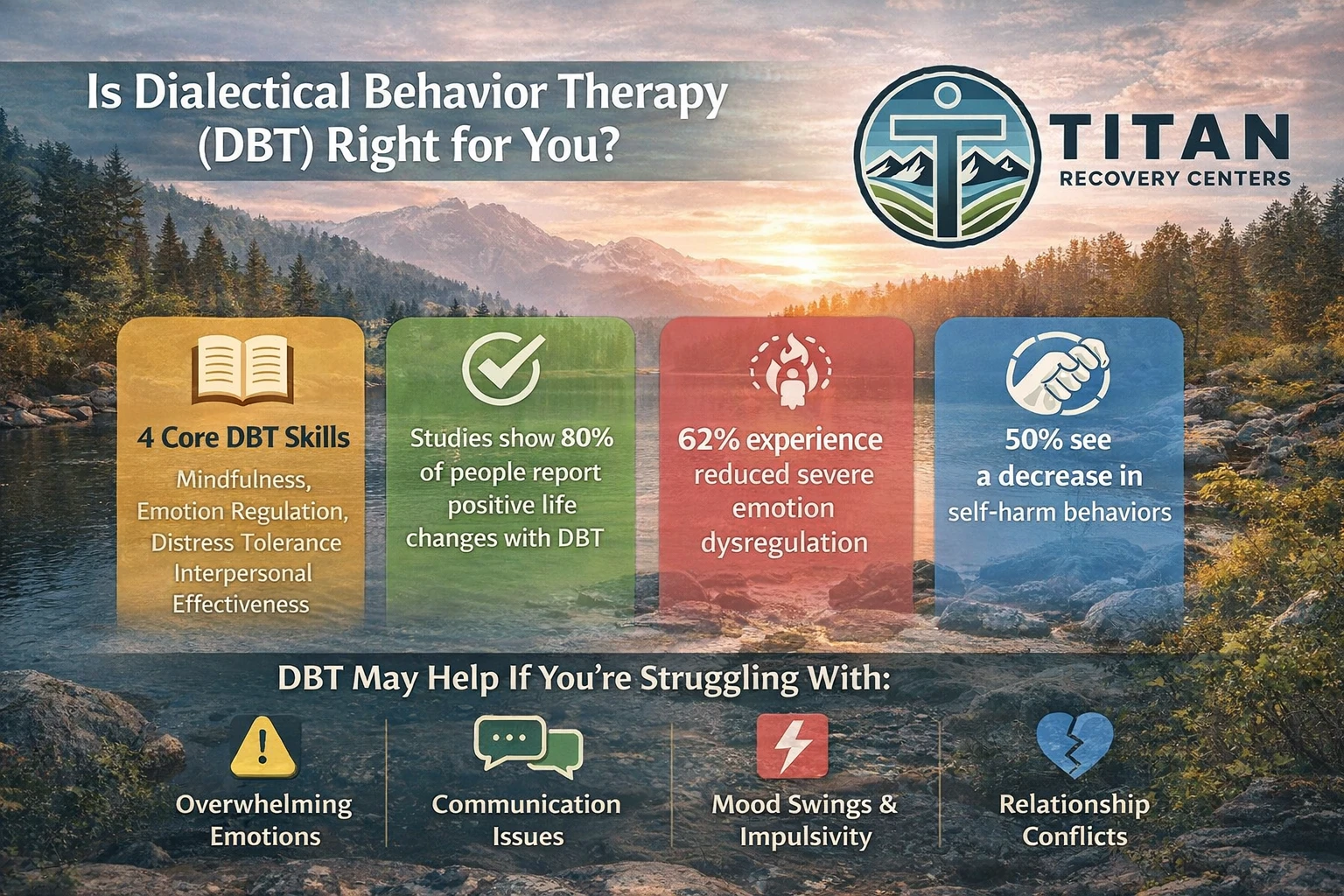
The therapy is structured around four main skill areas:
- Mindfulness: Paying attention to the present moment with curiosity instead of judgment.
- Emotion Regulation: Understanding what you feel and learning how to shift emotional states more effectively.
- Distress Tolerance: Managing painful moments without making things worse (think grounding, coping strategies, and calming tools).
- Interpersonal Effectiveness: Navigating relationships with confidence, setting boundaries, and asking for what you need—without guilt or fear.
Each of these skill sets is practical, learnable, and life-changing. DBT isn’t about being perfect. It’s about practicing new ways to care for yourself when things get hard.
How DBT Sessions Work
When you begin DBT at Titan Recovery Centers, the process is structured but never rigid. It includes:
- One-on-one therapy with a trained DBT therapist, where you work on personal challenges and apply skills in real-life scenarios.
- Group skills training, where you learn and practice DBT tools in a supportive environment.
- Homework and reflection tools, to help you use your new skills outside of sessions.
You’ll never be expected to “get it right” immediately. The goal is progress—not perfection.
We often remind clients that DBT is like learning to swim. At first, it might feel awkward. But over time, with the right support, your confidence grows—and so does your ability to stay afloat when waves hit.
DBT Can Help You Build Emotional Confidence
Emotions don’t have to be something you fear, avoid, or stuff down. With DBT, you learn how to feel safely. You start to trust your emotional system again instead of fighting it.
Here’s what emotional control through DBT might look like:
- Naming what you’re feeling without spiraling
- Riding out a tough day without shutting down
- Responding to conflict with clarity instead of anger
- Letting people in without losing yourself
- Calming your body when panic or shame shows up
These are not dramatic transformations—they’re quiet, steady shifts. And they matter. Because when you learn how to regulate your emotional world, everything else—relationships, work, sleep, decision-making—starts to feel more manageable.
Real Voices: What Clients Say
“I didn’t know what DBT was when I started. I just knew I couldn’t keep feeling out of control. Now, I actually know what to do when I feel overwhelmed.”
— Individual Therapy Client
“I used to either blow up or go silent. DBT gave me words, space, and a way to breathe through moments I used to run from.”
— Skills Group Participant
“I finally feel like I can handle my emotions instead of them handling me.”
— DBT Client, 2023
Why First-Time Therapy Clients Choose DBT
For many people, especially those considering treatment for the first time, DBT feels like a relief. It’s not abstract or overly clinical. It’s hands-on. It’s hopeful. And it doesn’t require you to pretend you’re okay when you’re not.
Here’s why DBT works well for first-time therapy clients:
- It’s structured, so you always know what to expect
- It’s collaborative—you and your therapist work together as equals
- It focuses on building skills, not just analyzing problems
- It validates your emotional experience while offering new ways forward
In communities like Paradise, Nevada, where emotional health resources can feel limited or intimidating, DBT offers a gentle, grounded way to begin.
DBT FAQs: What You Might Be Wondering
Do I have to be in crisis to do DBT?
Not at all. DBT is for anyone who wants better emotional balance. Many people start DBT simply because they’re tired of feeling dysregulated.
Will I be forced to talk about things I’m not ready for?
No. DBT focuses on what’s helpful in the moment. You’ll never be pushed into a topic you’re not ready to explore.
Is DBT only for people with a diagnosis?
While DBT is often used for specific diagnoses (like BPD or PTSD), it’s also widely used to support emotional wellness in general.
What if I’ve never done therapy before?
That’s totally okay. DBT can actually be a great place to start—it’s clear, guided, and designed to support people at all levels of experience.
Can I use DBT tools outside of therapy?
Yes! That’s the point. DBT is built to help you navigate real-life moments—at work, at home, in relationships. The goal is practical change, not just insight.
What’s Next: Learning More About DBT
If you’ve been feeling like your emotions are running the show—and you’re ready to feel more in control—DBT might be your next step.
It’s okay to be scared. It’s okay to be unsure. But you don’t have to do it alone.
Call (888) 976-8457 to learn more about our Dialectical Behavior Therapy services in Las Vegas, Nevada.