

You already know something isn’t right.
You don’t need someone to convince you it’s “bad enough.” You just need something that actually works. If you’ve tried therapy before and still feel stuck, reactive, numb, or exhausted from managing your own emotions, you’re not failing treatment.
You may just need a different kind of approach.
If you’ve been looking into EMDR, you’ve probably noticed people say it feels different. That’s not marketing language. For many first-time treatment seekers, it genuinely is.
Let’s talk about why.
EMDR Does Not Just Talk About Trauma — It Processes It
Many people come into treatment saying:
“I understand my childhood.”
“I’ve talked about this before.”
“I know why I react the way I do.”
And yet, their body still reacts.
That’s the frustrating part. Insight doesn’t always equal relief.
EMDR works differently because trauma is not stored only as a story. It is stored in the nervous system. When something overwhelming happens, the brain can freeze that memory in survival mode. Years later, a small trigger can activate the same alarm system.
EMDR helps your brain reprocess those memories so they are stored as past events—not current threats.
It’s the difference between knowing the fire is out and still smelling smoke everywhere.
It Is Structured And Designed For Safety
If you’re considering treatment for the first time, fear is normal.
You might worry:
- What if I fall apart?
- What if I can’t handle what comes up?
- What if this makes things worse?
EMDR is not about throwing you into the deepest memory on day one.
The process begins with stabilization. Grounding skills. Emotional regulation tools. A clear structure.
Only when you feel ready do you begin processing specific experiences. Even then, sessions are guided carefully using bilateral stimulation—often eye movements, tapping, or tones—to help your brain integrate the memory in a new way.
You remain in control.
That alone makes it feel different from therapies that feel like open-ended excavation.
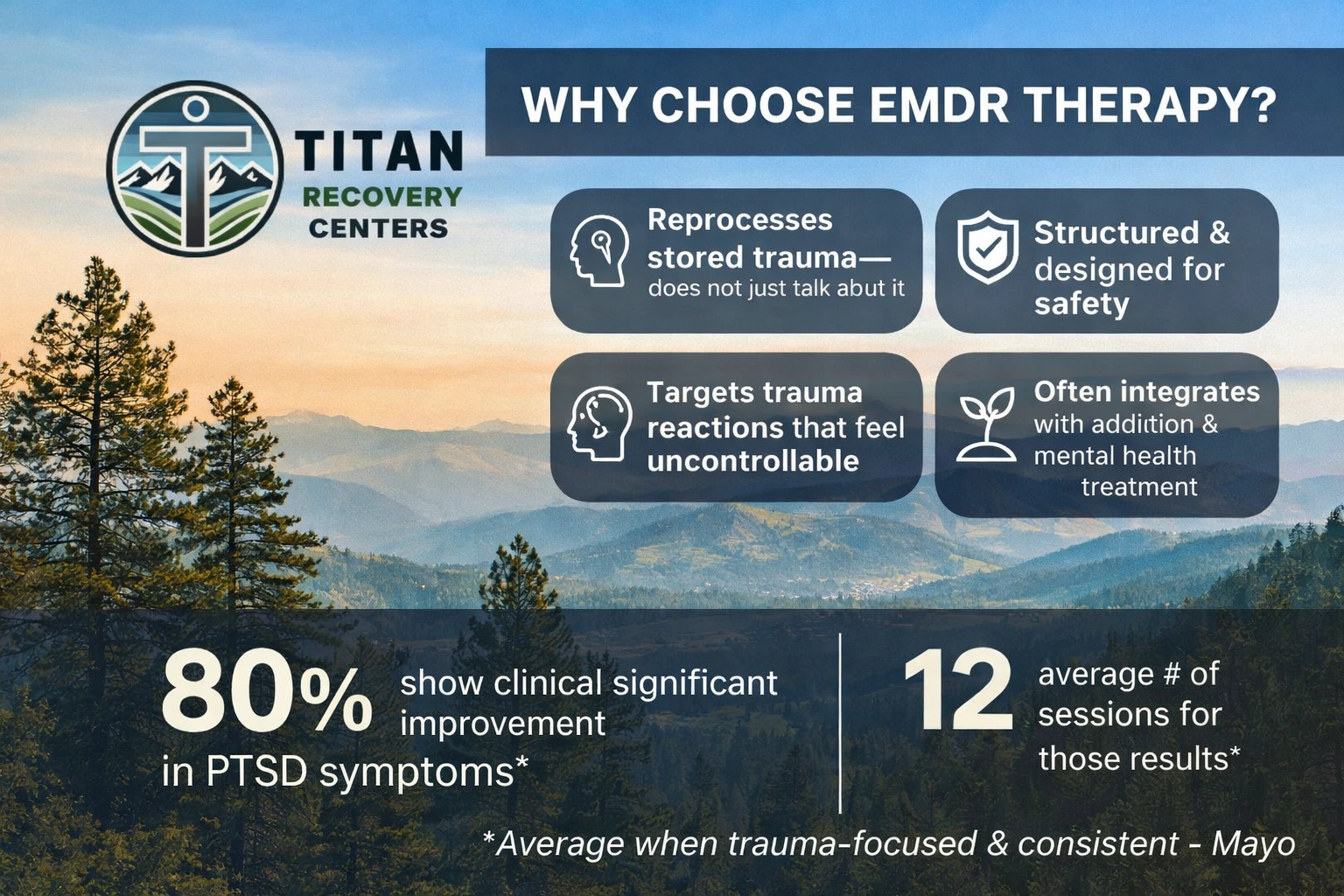
It Addresses The Reactions You Cannot Think Your Way Out Of
Maybe you do not consider yourself “traumatized.”
But you may notice:
- You overreact during conflict.
- You shut down emotionally.
- You panic when criticized.
- You numb out with substances or distraction.
- You feel shame that lingers longer than it should.
These are not character flaws.
They are nervous system responses.
When the brain has stored distress in survival mode, it reacts quickly and intensely—even when the present moment does not warrant it.
EMDR helps lower the emotional charge attached to those stored memories. Over time, triggers lose their sharpness.
You still feel.
You just do not feel hijacked.
EMDR Targets The Root Instead Of Managing The Surface
You may have tried coping skills. Maybe medication. Maybe talk therapy. Maybe white-knuckling it.
Those tools are valuable. They help manage symptoms.
But if the root memory that shaped your fear, shame, or hypervigilance is still unprocessed, the symptoms tend to resurface under stress.
EMDR works at the root.
It identifies the memory networks connected to your current reactions and helps your brain reorganize them. That shift reduces the intensity of anxiety, anger, panic, or emotional shutdown.
When the root settles, the surface follows.
Many People Notice Shifts Faster Than Expected
Not overnight.
Not magically.
But many people say after several sessions:
“That memory feels distant.”
“I can talk about it without shutting down.”
“I don’t react the same way anymore.”
The change is often subtle at first. Then it compounds.
It feels like taking off armor you did not realize you were wearing.
You are not becoming someone new. You are becoming less defended.
It Integrates With Addiction And Mental Health Treatment
If substance use is part of your story, EMDR can be especially important.
Substances often function as regulation. They calm anxiety, mute shame, soften intrusive thoughts, and create temporary emotional relief.
If trauma is driving that internal distress, simply removing the substance does not address the root.
At Titan Recovery Centers, EMDR is integrated into comprehensive addiction and mental health treatment. That means we are not only helping you stop a behavior—we are helping you understand what the behavior was trying to manage.
In areas like Spring Valley, Nevada, more individuals are seeking trauma-informed approaches because they recognize that willpower alone is not sustainable. Similarly, in Paradise, Nevada, integrated EMDR treatment has become an essential part of long-term recovery planning for those who want more than short-term symptom control.
Trauma-informed care is not a trend. It is a shift toward treating the whole person.
You Do Not Have To Be Certain To Begin
One of the biggest myths about starting treatment is that you must feel completely ready.
You do not.
You can feel scared.
You can feel skeptical.
You can feel unsure.
Being willing to explore is enough.
If you have been hiding pain behind competence, humor, independence, or silence, EMDR offers a way to address it without reliving it endlessly.
You do not have to hit bottom to deserve healing.
You just have to be willing to take one step.
What EMDR Sessions Typically Feel Like
People often ask what the experience is actually like.
During a session:
- You identify a specific memory or target.
- You rate how distressing it feels.
- Bilateral stimulation begins.
- Your brain starts making connections naturally.
Sometimes new insights arise. Sometimes emotions surface and settle. Sometimes physical tension decreases.
The goal is not to force a breakthrough.
The goal is integration.
Over time, memories that once felt overwhelming begin to feel manageable.
You are not erasing your story.
You are reorganizing how it lives inside you.
Frequently Asked Questions About EMDR
Is EMDR Only For Severe Trauma?
No. EMDR is effective for a wide range of distressing experiences, including relational conflict, chronic stress, anxiety, shame patterns, and substance-related triggers.
How Long Does EMDR Take?
It depends on your history and goals. Some specific memories process in a few sessions. More complex trauma histories require longer treatment. Plans are individualized.
Will EMDR Make Me Relive Everything?
No. You briefly activate memories while supported by a clinician. You are not required to recount every detail.
Can EMDR Make Things Worse?
Temporary emotional activation can occur, but when conducted properly with stabilization and pacing, EMDR is structured to prevent overwhelm.
Does EMDR Work Alongside Medication?
Yes. EMDR can complement psychiatric care and does not require discontinuing medication.
What If I Have Tried Therapy Before And It Did Not Work?
That is more common than you think. EMDR often feels different because it engages the nervous system rather than relying solely on insight.
Is EMDR Evidence-Based?
Yes. EMDR is recognized as an evidence-based trauma therapy by multiple major health organizations worldwide.
If You Have Been Carrying This Quietly
There is a specific kind of exhaustion that comes from managing your own reactions every day.
Monitoring yourself.
Calming yourself.
Apologizing for yourself.
EMDR is not about dissecting your personality.
It is about helping your brain update its threat system.
When the past no longer feels present, you stop living on guard.
That shift can change everything.
If you are ready to explore whether EMDR could help you move forward—not just cope—our team is here to guide you.
Call (888) 976-8457 to learn more about our EMDR Therapy in Las Vegas, Nevada.
