

I didn’t relapse because I forgot the pain.
I relapsed because I didn’t understand it.
When I came back after 90 days sober, I felt like I had burned my own house down. I wasn’t new. I wasn’t clueless. I knew the language. I knew the steps. And that somehow made it worse.
What I didn’t know yet was how much unprocessed trauma was still quietly running my life.
That’s when EMDR came back into the picture.
I had heard about it before. I had even nodded politely in group when someone mentioned it. But this time, I actually leaned in. This time, I let it help me.
And it changed the way I understand my using.
I Thought Sobriety Meant I Was “Fixed”
For 90 days, I did everything right.
Meetings. Journaling. Avoiding old people and places. Saying the right things in group. I looked solid.
But inside? I was white-knuckling emotions I didn’t have names for.
Anxiety that felt bigger than the moment.
Anger that didn’t match the situation.
Shame that showed up out of nowhere.
I thought that was just early recovery. I told myself to tough it out.
But sobriety without healing felt like sitting on top of a volcano pretending the ground wasn’t hot.
When I relapsed, I didn’t feel rebellious. I felt relieved.
And that scared me more than anything.
EMDR Helped Me See That My Using Wasn’t Random
EMDR stands for Eye Movement Desensitization and Reprocessing. I know—it sounds clinical. Almost mechanical.
But what it actually does is help your brain reprocess experiences that got stuck.
When something overwhelming happens, sometimes the brain doesn’t file it away properly. It stays “live.” Your body keeps reacting like the threat is still happening.
For me, that meant:
- Overreacting to criticism
- Shutting down during conflict
- Feeling panic when someone raised their voice
- Reaching for something to numb out afterward
I always thought I was just “too sensitive.”
EMDR showed me I was wired for survival.
And survival mode looks a lot like addiction when you’re trying to cope.
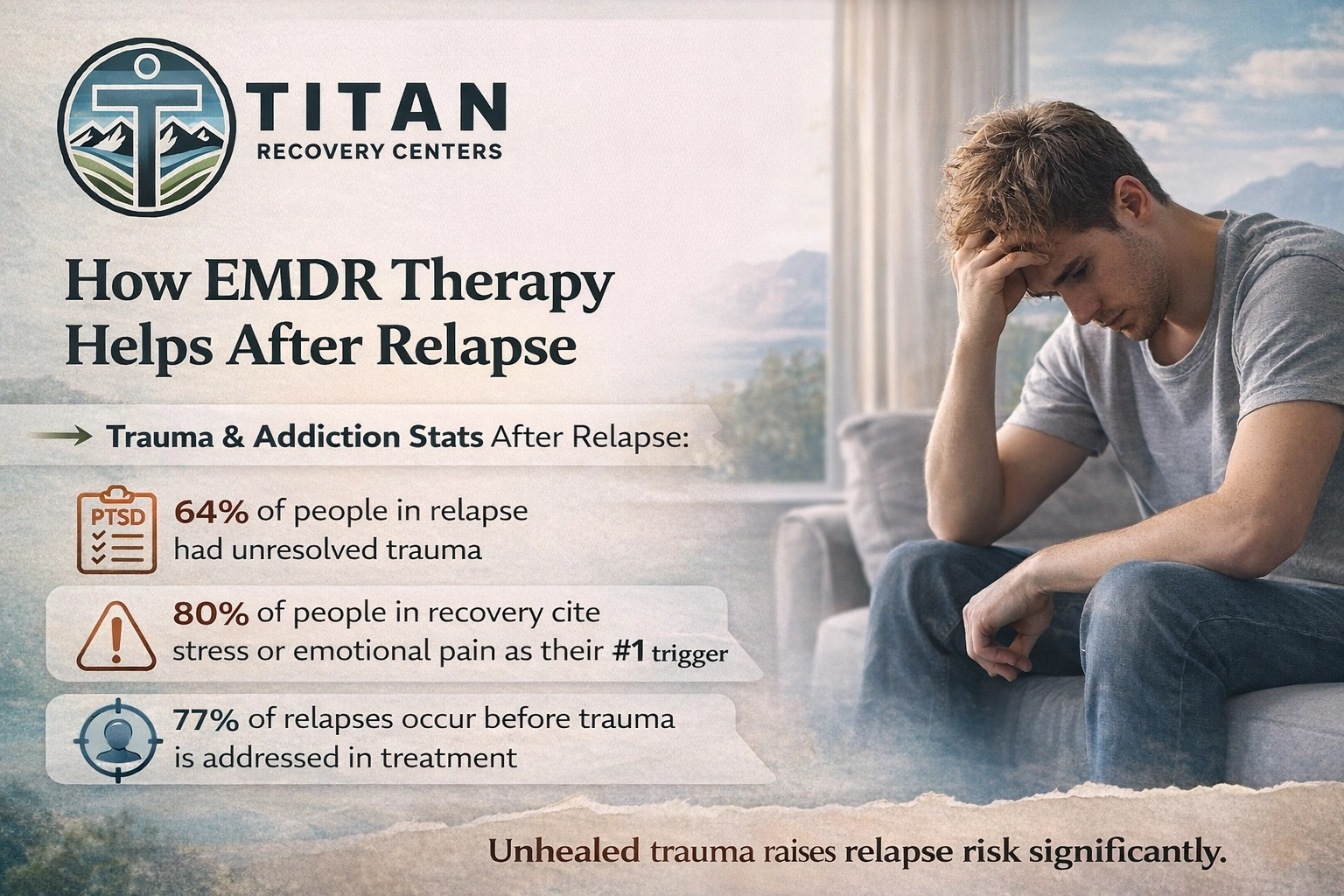
Trauma Isn’t Always Loud
I used to think trauma had to be dramatic.
A car accident. Violence. Something extreme.
What EMDR uncovered for me was quieter.
Years of walking on eggshells.
Being the peacekeeper in a chaotic house.
Learning that my emotions were “too much.”
Never feeling fully safe to relax.
None of it made headlines. But it shaped my nervous system.
When we processed certain memories, I could actually feel the shift. My body didn’t clench the same way. The images felt farther away.
It wasn’t about blaming anyone. It wasn’t about rewriting history.
It was about my brain finally realizing: that’s over.
Relapse Wasn’t Proof I Failed — It Was a Clue
This is the part I wish someone had told me sooner.
Relapse isn’t always about willpower.
Sometimes it’s about unresolved pain.
When we targeted specific memories in EMDR, I noticed patterns:
After feeling criticized → urge to drink.
After conflict → urge to isolate.
After feeling abandoned → urge to numb.
It wasn’t random. It was predictable.
My relapse wasn’t a moral collapse. It was my nervous system reaching for what it knew.
And once I understood that, the shame started to loosen its grip.
EMDR Made Sobriety Feel Safer
Before EMDR, sobriety felt exposed.
Like walking around without skin.
Everything hit harder. Emotions felt sharp. Triggers felt overwhelming.
After several EMDR sessions, something changed.
I wasn’t less emotional.
I was less hijacked.
There’s a difference.
Triggers didn’t send me into spirals the same way. Old memories didn’t carry the same charge. I could feel something without immediately needing to escape it.
It felt like my brain had more space.
And space is everything in recovery.
I Was Afraid EMDR Would Break Me Open
I’ll be honest. I was scared.
I thought digging into trauma would make things worse. I worried I’d unravel and not be able to put myself back together.
But EMDR is structured. It’s paced. You don’t just dive into the deep end without support.
At Titan Recovery Centers, the way EMDR is integrated into treatment doesn’t feel chaotic. It feels intentional. It happens in the context of safety.
For alumni returning to care in Henderson, Nevada, that mattered to me more than I expected. Familiar environment. Familiar faces. A different approach to the same deeper issue.
And if you’re closer to North Las Vegas, Nevada, the access to trauma-informed mental health services within addiction treatment can make re-engaging feel less overwhelming and more grounded.
You don’t have to start over somewhere brand new to start differently.
You’re Not Back at Day One
If you’re reading this after a relapse, I need you to hear something clearly.
You didn’t erase your progress.
The days you stayed sober? They mattered. The insights you gained? They’re still yours.
Relapse doesn’t reset your wisdom. It reveals what still needs care.
EMDR helped me realize I wasn’t broken—I was unfinished.
There’s a big difference.
What EMDR Actually Feels Like
People ask this a lot, so I’ll answer it plainly.
During EMDR, you briefly bring up a specific memory while following a therapist-guided bilateral stimulation (often eye movements, taps, or tones).
You’re not stuck reliving it for an hour. It’s more like touching it in controlled doses while your brain processes it differently.
For me, sessions sometimes felt:
- Emotional but manageable
- Physically relieving
- Surprisingly calm
- Occasionally tiring afterward
What I didn’t feel was retraumatized.
Over time, memories that once felt sharp started to feel like… memories. Not current threats.
That shift changed how I moved through the world.
The Connection Between Trauma and Addiction
If you’ve ever wondered why you keep returning to the same substance even when you know better, consider this:
Addiction often functions as regulation.
It soothes anxiety.
It numbs shame.
It quiets intrusive memories.
It creates artificial safety.
If trauma wires your nervous system to stay on high alert, substances can feel like the only off switch.
EMDR doesn’t remove your past.
It helps your nervous system stop reacting like the past is still happening.
And when your body feels safer, the craving to escape sometimes softens naturally.
Not magically. Not instantly.
But noticeably.
I Don’t White-Knuckle It Anymore
Before EMDR, sobriety was effort.
Constant effort.
After EMDR, sobriety feels more like alignment.
I still have bad days. I still feel stress. I still get triggered sometimes.
But I’m not fighting ghosts the same way.
The past doesn’t sit on my chest at night like it used to.
And that alone has been worth going back.
FAQs About EMDR and Relapse Recovery
Is EMDR only for severe trauma?
No. EMDR can address “big T” trauma and smaller, chronic experiences that shaped how you see yourself or respond to stress. Many people in addiction recovery discover that subtle, long-term stressors had a deeper impact than they realized.
Can EMDR help even if I’ve relapsed more than once?
Yes. Relapse often highlights unresolved emotional patterns. EMDR doesn’t judge how many times you’ve returned—it focuses on what’s driving the behavior beneath the surface.
Will EMDR make cravings disappear?
Not necessarily. EMDR isn’t a craving eraser. But by reducing the emotional intensity behind certain triggers, many people experience fewer overwhelming urges connected to past events.
How long does EMDR take?
It varies. Some memories process quickly. Others require more sessions. EMDR is typically integrated into a broader treatment plan, especially when addressing both addiction and mental health.
What if I’m scared to revisit painful memories?
That’s normal. A trained therapist moves at your pace. You build grounding skills first. You’re never forced into content you’re not ready to process.
Can EMDR be part of addiction treatment?
Absolutely. Trauma-informed care is often essential in long-term recovery. EMDR can be a powerful component of a comprehensive treatment approach.
If You’re Sitting in Shame Right Now
I know the feeling.
The quiet self-talk that says:
“You blew it.”
“They won’t take you seriously.”
“You should know better by now.”
I had all of that running through my head.
But healing isn’t linear. It’s layered.
Sometimes you need sobriety first to see what’s underneath. And sometimes you need trauma work to make sobriety sustainable.
EMDR helped me connect my trauma to my using.
Once I saw the connection, I stopped hating myself for it.
That might be the most important part.
If you’re ready to explore whether EMDR could help you address what’s beneath your relapse, you don’t have to figure it out alone.
Call (888) 976-8457 to learn more about our EMDR Therapy in Las Vegas, Nevada.
