

When your 20-year-old starts using again, it can feel like the ground disappears beneath you.
You replay every conversation. Every warning sign. Every moment you thought things were finally turning around.
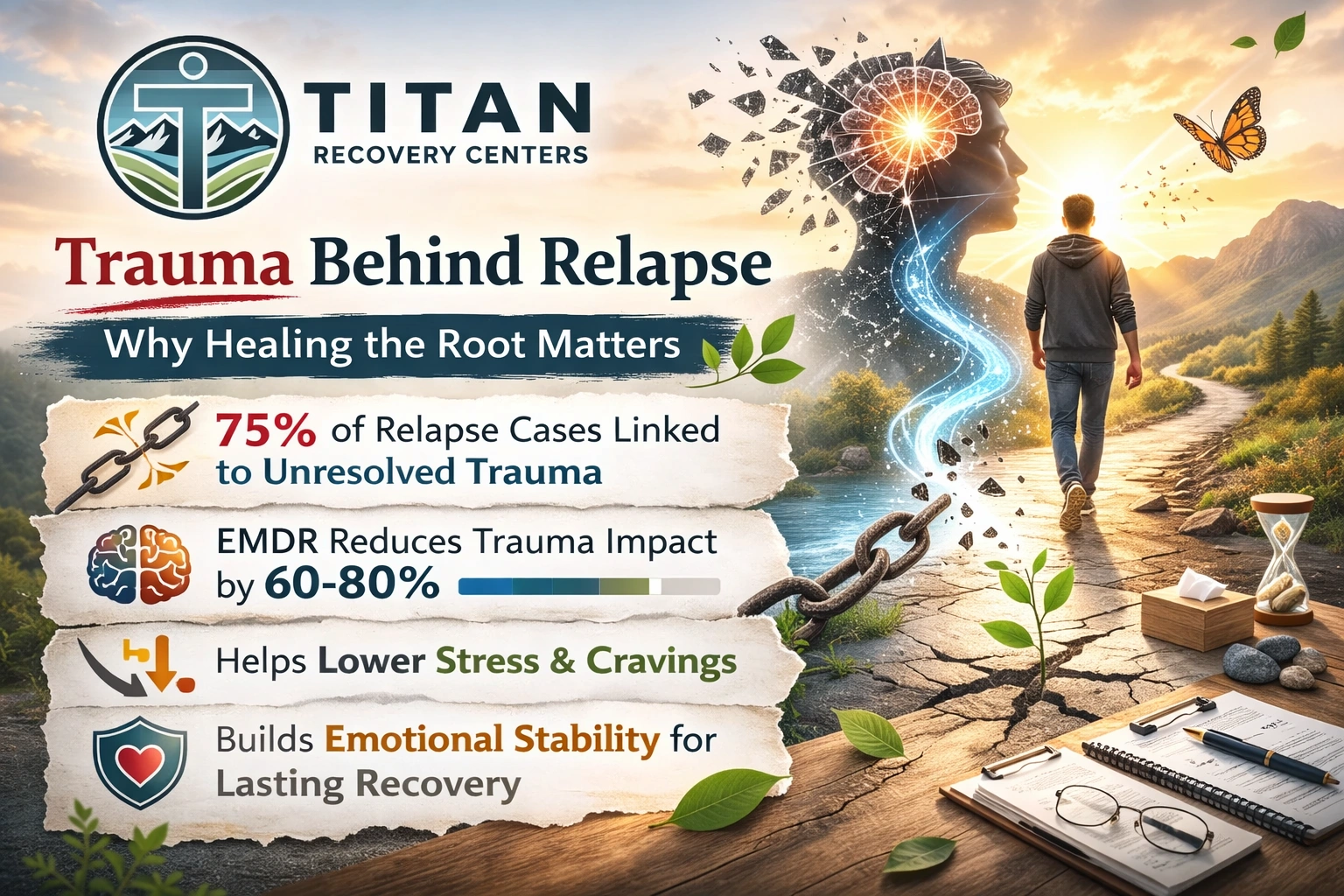
Before you blame yourself—or assume they just didn’t try hard enough—I want to offer something steady and hopeful: relapse is often driven by unresolved trauma. And therapies like EMDR are designed to treat what’s underneath the behavior, not just the behavior itself.
Relapse Is Often A Stress Response, Not A Moral Failure
From the outside, relapse can look like a choice.
From the inside, it often feels like survival.
When someone has experienced trauma—especially in childhood or adolescence—their nervous system can stay on high alert. Even when life appears stable, the body may still be bracing for danger.
When stress spikes, the brain looks for relief. Substances can temporarily quiet anxiety, numb shame, or soften emotional overwhelm.
That doesn’t make it healthy.
But it does make it understandable.
As a clinician, I’ve sat with many parents who say, “They were doing so well. Why would they throw it away?”
The truth is, most young adults don’t relapse because they stopped caring. They relapse because something inside still hurts.
What EMDR Actually Does (And Why It’s Different)
EMDR stands for Eye Movement Desensitization and Reprocessing.
In simple terms, EMDR helps the brain reprocess distressing memories that were never fully integrated. When something overwhelming happens, the brain can store that memory in a way that keeps it emotionally “active.” Years later, a small trigger can activate a large reaction.
EMDR uses bilateral stimulation—often guided eye movements or tapping—while a person briefly focuses on a specific memory. This helps the brain reprocess and “file” the experience differently.
The goal is not to erase the memory.
The goal is to reduce the emotional charge attached to it.
When the charge decreases, the nervous system calms. And when the nervous system calms, the need to self-medicate often lessens.
Trauma Beneath Relapse Is Not Always Obvious
Parents often look for a major event.
An accident. Violence. A dramatic turning point.
But trauma can be much quieter.
It can look like:
- Years of bullying that were minimized
- Feeling chronically compared to siblings
- Emotional invalidation
- Sudden family transitions
- Witnessing conflict that felt unsafe
- Feeling responsible for keeping peace at home
These experiences may not seem catastrophic. But to a developing brain, repeated stress without resolution can shape how the nervous system responds to the world.
Many young adults don’t say, “I’m relapsing because of trauma.”
They say, “I just couldn’t handle it.”
Or, “I don’t know why I did it.”
EMDR helps uncover those missing connections.
Why Insight Alone Doesn’t Always Prevent Relapse
Your child may understand recovery principles.
They may know the risks. They may even want sobriety.
But trauma isn’t stored only in thoughts—it’s stored in the body.
A young adult can logically know they are safe, but still feel panic when confronted. They can understand they are loved, yet spiral into shame after small mistakes.
That gap between knowing and feeling is critical.
Traditional talk therapy builds awareness. EMDR works on the physiological imprint of distress.
When memories are reprocessed, triggers lose intensity. Emotional reactions become proportional rather than explosive.
It’s the difference between constantly holding your breath and finally being able to exhale.
What EMDR Sessions Typically Look Like
Parents often worry that EMDR will overwhelm their child.
In reality, EMDR is structured and paced.
First, the therapist builds stabilization skills. Grounding exercises. Emotional regulation tools. Safety planning.
Only then does memory processing begin.
During processing:
- The young adult briefly recalls a targeted memory.
- Bilateral stimulation is introduced.
- The brain begins to integrate the experience differently.
Sessions are guided. Monitored. Adjusted in real time.
The goal is containment, not re-traumatization.
In communities like Spring Valley, Nevada, families often seek care that blends trauma-informed therapy with addiction treatment rather than separating the two. When both are addressed together, the outcomes tend to be stronger.
Similarly, families in Paradise, Nevada increasingly look for integrated mental health support that recognizes relapse as part of a larger emotional story—not simply a behavioral problem.
Addressing trauma alongside addiction is not a trend. It is a clinical necessity.
How EMDR Builds Long-Term Stability
When trauma remains unresolved, recovery can feel like constant restraint.
Your child may appear stable, but internally they are working overtime to manage emotional triggers.
EMDR reduces the intensity of those triggers.
Over time, parents often notice:
- Less emotional volatility
- Greater tolerance for stress
- Reduced defensiveness
- More consistent follow-through
- Fewer shame spirals
These shifts are often subtle at first.
But stability built on nervous system regulation is different from stability built on fear of consequences.
One is fragile.
The other is sustainable.
Relapse As Information, Not Identity
One of the most damaging beliefs young adults carry after relapse is this: “I failed. I am the problem.”
When trauma is identified and treated, relapse can be reframed as information.
It signals:
- Where vulnerability still exists
- Which memories still carry charge
- What emotional wounds need attention
This perspective removes shame without removing responsibility.
Healing still requires effort.
Accountability still matters.
But shame is no longer the driver.
And shame is rarely effective fuel for recovery.
What This Means For You As A Parent
You may be exhausted.
You may feel embarrassed to tell friends.
You may feel anger mixed with fear.
You may feel guilt for not seeing something sooner.
Please hear this clearly: trauma can exist even in loving homes.
Parents do not have to be villains for trauma to impact a child’s nervous system. Sometimes trauma comes from peers, relationships, loss, or experiences completely outside your control.
Your role now is not to dissect the past endlessly.
Your role is to help guide them toward care that addresses the full picture.
EMDR is one piece of that picture.
Frequently Asked Questions About EMDR And Relapse
Does EMDR replace addiction treatment?
No. EMDR is most effective when integrated into a comprehensive treatment plan that includes addiction care, psychiatric support, and family involvement.
Is EMDR safe for young adults?
Yes, when conducted by a trained clinician in a structured setting. Preparation and stabilization are essential parts of the process.
How long does EMDR take?
It varies. Some memories process in a few sessions. More complex trauma may require extended work. Treatment plans are individualized.
What if my child denies having trauma?
That is common. Many young adults do not label their experiences as traumatic. Assessment and gentle exploration often reveal distressing memories that were minimized.
Can EMDR guarantee relapse won’t happen again?
No therapy can guarantee that. However, addressing trauma significantly reduces one of the core drivers of relapse.
Will EMDR make things worse before they get better?
Temporary emotional activation can occur, but when done properly, EMDR is structured to prevent overwhelm. Safety and pacing are prioritized.
Can parents be involved in the process?
Yes. Family therapy and parent education often accompany trauma work to improve communication and reduce reactivity at home.
When Hope Feels Fragile
You may not feel hopeful right now.
You may feel guarded. Skeptical. Worn down.
That makes sense.
But relapse does not erase progress. It often reveals what still needs healing.
When treatment addresses trauma beneath relapse, recovery stops being about constant control and starts becoming about internal safety.
And internal safety changes everything.
If you are ready to learn more about how trauma-focused care can support your child’s recovery, you do not have to navigate it alone.
Call (888) 976-8457 to learn more about our EMDR Therapy in Las Vegas, Nevada.
