

You’ve seen them get clean before. Maybe it lasted weeks. Maybe it lasted months. You dared to hope. But now it’s happening again—and your heart is breaking.
They’re twenty. Or close to it. And you’ve watched this pattern unfold more than once. They get a little better, then disappear into the same pain, the same people, the same cycle. Maybe they call it “just blowing off steam.” Maybe they’ve given up pretending. Either way, you’re stuck in the same place: wondering why this keeps happening.
And deep down, you suspect something more is driving it.
You’re right. Often, it’s trauma. And that’s where EMDR therapy can change everything.
Trauma Isn’t Always What You Think
When most people hear “trauma,” they picture catastrophic events—car accidents, war zones, abuse. But trauma can be quieter and far more common. Emotional neglect, bullying, unstable homes, sudden losses, chronic stress—all of these can wire the brain for survival instead of connection.
In young adults, especially those still forming identity and emotional regulation, these wounds don’t just disappear. They echo. And when they go untreated, the brain searches for ways to cope. Substances can numb the noise. But the relief doesn’t last.
Relapse isn’t always about the drug. It’s about the pain underneath it.
The Trauma-Relapse Loop (And Why Logic Doesn’t Stop It)
If you’ve ever said, “They know better,” you’re not wrong. But trauma doesn’t play by logic’s rules.
Here’s what happens in the brain:
- A trigger hits—something stressful, familiar, or even unconscious.
- The brain flashes danger signals—even if the threat isn’t real.
- Old survival responses kick in: run, numb, shut down, fight.
- Substances become a fast exit from that alarm.
Even if your child wants to stay sober, the trauma pathway overrides reasoning. They might not even understand why they did it. They just needed out.
How EMDR Therapy Helps Rewire That Cycle
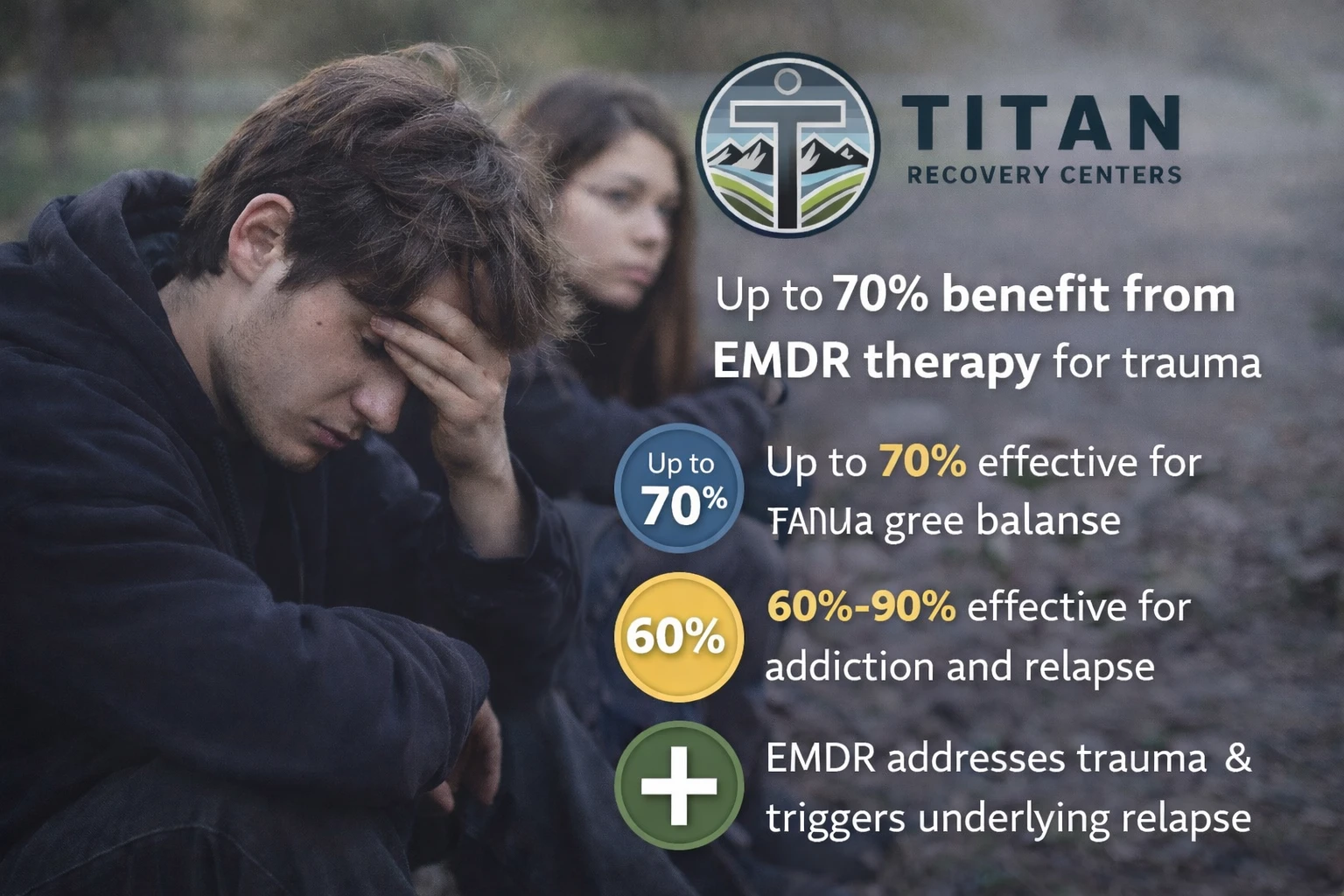
EMDR (Eye Movement Desensitization and Reprocessing) is a trauma-focused therapy that works directly with the brain’s memory and stress systems. At Titan Recovery Centers in Las Vegas, EMDR is a core offering for clients who’ve experienced multiple relapses, complex trauma, or emotional overwhelm.
Here’s how it helps:
1. Targets the Root, Not Just the Behavior
Instead of focusing only on cravings or coping skills, EMDR identifies unresolved memories or belief patterns driving the pain.
2. Calms the Nervous System
EMDR uses bilateral stimulation (usually eye movements or tapping) to help the brain reprocess traumatic memories in a way that signals safety—not danger.
3. Reduces the Power of Triggers
After EMDR, many clients report feeling less reactive to stress. The same memory that used to cause panic feels “further away” or “not so intense anymore.”
4. Builds Emotional Regulation
When the trauma loop quiets, young adults can finally access the emotional clarity needed to make different choices.
Why It Matters for Young Adults
Young adults are at a unique developmental stage—still forming their identities, navigating intense social pressure, and learning emotional regulation. When trauma hits at this age (or earlier), it can stunt or distort that development. That’s why recovery for this group has to include more than behavior management. It needs to address why the behavior exists in the first place.
At Titan Recovery Centers, we see this every day: bright, capable young people caught in cycles that make no sense to their families—and often, not even to themselves. EMDR offers a path that goes deeper than lectures or ultimatums. It offers actual relief.
What to Expect From EMDR Therapy
If you’re unfamiliar with EMDR, it can sound strange. But it’s rooted in neuroscience and backed by decades of research.
Here’s a simple breakdown of what a typical EMDR process might involve:
1. Assessment and Preparation
The therapist gets to know your child—what they’ve been through, what still feels overwhelming, what coping skills they have. Before processing begins, they teach emotional regulation tools to ensure safety.
2. Targeting Painful Memories
This doesn’t mean retelling everything in detail. The therapist helps identify memories or beliefs that still carry emotional “charge”—even if they seem small on the surface.
3. Bilateral Stimulation
Using eye movements, taps, or sounds, the therapist guides the brain through reprocessing the memory while the client stays emotionally present. This activates both hemispheres of the brain and supports integration.
4. Desensitization and Reframing
As the memory is processed, the emotional intensity often drops. The client may start believing new things: “I’m not in danger.” “It wasn’t my fault.” “I can move forward.”
The Results We See with EMDR
At our Las Vegas center, clients often begin to shift after just a few sessions:
- They stop spiraling when they feel overwhelmed.
- Their cravings become less urgent.
- They gain language for pain that was once unspeakable.
- They begin to rebuild their sense of self—beyond the addiction.
In many cases, EMDR helps a stuck client finally move.
Supporting Your Child Through Trauma-Focused Recovery
It’s one of the hardest parts of being a parent—watching your child hurt, and not being able to fix it.
But you can help. Here’s how:
- Normalize trauma treatment. Let them know EMDR isn’t about digging up pain—it’s about getting free from it.
- Stay regulated. Your calm presence helps regulate their nervous system.
- Focus on safety, not shame. EMDR is most effective when clients feel safe. Let them know relapse doesn’t define them.
- Access support for yourself. Family therapy and support groups can help you hold boundaries without burning out.
If you’re nearby and you’re looking for EMDR in Spring Valley, NV or need trauma-focused care for a young adult near Paradise, NV, our team at Titan Recovery Centers is here to help. We provide real support—not just for the client, but for the family trying to hold hope together.
FAQs About EMDR and Trauma Recovery
Does my child have to remember their trauma for EMDR to work?
No. EMDR can work with sensations, images, or beliefs—even if there’s no clear memory. The brain still knows what needs processing.
Is EMDR safe for someone in early recovery?
Yes. At Titan, we assess readiness carefully. Clients only begin EMDR after building stability, trust, and coping skills.
Can EMDR help even after multiple relapses?
Absolutely. In fact, it’s often most helpful for clients who feel stuck in repeated relapse cycles. EMDR targets the pain driving the behavior.
How long does EMDR take to work?
Some clients experience relief in 3–5 sessions. For others, deeper trauma work unfolds over time. Each plan is individualized.
Is EMDR covered by insurance?
Many insurance plans cover trauma therapy. Our team can help verify coverage and discuss options that fit your family’s needs.
Can EMDR replace addiction treatment?
No. It works best as part of a comprehensive program that includes group therapy, life skills, and clinical support. At Titan, EMDR is one part of our integrated approach.
You’re Not Alone—and Neither Are They
It’s okay if you’re exhausted. It’s okay if you’re scared. You’re trying to help someone you love survive something you don’t fully understand—and that takes strength.
The relapse isn’t your fault. And neither is the pain that keeps calling your child back to substances. But healing is possible—with the right tools, at the right time, in the right hands.
If trauma is fueling the cycle, EMDR could be the key to finally breaking it.
Call (888) 976-8457 to learn more about EMDR services in Las Vegas, Nevada. Help is here—and hope still lives here, too.