

Curious, Not Clueless: You’re Allowed to Ask Questions
You don’t need a rock bottom moment to start exploring help.
You don’t need a diagnosis, an intervention, or a sob story.
You just need permission to be curious—and maybe a little tired of pretending everything’s fine.
If you’re sober curious—reconsidering your relationship with substances, with stress, or with how you’re actually feeling when no one’s looking—then exploring a residential treatment program isn’t overkill. It’s practical. It’s wise. It means you’re paying attention to the voice in your head that whispers, “What if life could be better than this?”
But here’s the thing: not all treatment centers are built the same. And choosing one isn’t about who has the best brochure. It’s about asking questions that help you figure out if a place is actually built for someone like you.
This guide will walk you through the essential, no-BS questions to ask when evaluating any residential treatment program in Las Vegas—especially if you’re somewhere between burnout and “maybe I need something more.”
1. Start With This: “What Do I Actually Need Right Now?”
Before you pick up the phone or browse another website, ask yourself this:
- What am I hoping this will change?
- Do I need full-on support or just more tools?
- What am I afraid will happen if I don’t get help?
- What am I afraid will happen if I do?
You’re not committing to anything by asking these. You’re just clarifying your own starting point.
Some people enter residential care because they can’t function without substances. Others are high-functioning but exhausted. Some feel stuck in loops of anxiety, trauma, or depression they can’t seem to climb out of.
Whatever your “why” is—it’s valid. And knowing it helps you ask questions that actually matter to you.
2. Ask: “What Does a Typical Day Look Like—Really?”
Treatment isn’t just about therapy. It’s about time.
You’re giving your entire day to this space—possibly for weeks or months. You deserve to know what that time will feel like. So ask:
- What’s the daily schedule like?
- How are mornings structured? Evenings?
- Is there time outside, time to be alone, or just breathe?
Some programs pack the schedule wall-to-wall. Others offer space for integration, rest, and reflection. What you want may depend on your energy level, mental health needs, or burnout status.
At Titan Recovery, for example, our residential treatment program in Paradise, NV is structured—but flexible. We build in routine without rigidity, because recovery shouldn’t feel like punishment. It should feel like possibility.
3. Ask: “How Do You Treat People Who Aren’t Sure If They Belong?”
Not everyone walks through the doors ready to say, “I’m an addict.”
Some people say:
- “I just want to stop drinking every day.”
- “I think I use weed to avoid feeling anything.”
- “I’m not sure if I belong here, but I’m tired.”
You don’t have to be “sure” to be taken seriously. Ask the program:
- How do you support people exploring sobriety—not demanding it?
- What if I have mixed feelings about being here?
- Can I talk openly about ambivalence, or will that be judged?
If they can’t answer that gently and respectfully, keep moving.
If you’re looking for a residential treatment program in Spring Valley, NV that meets you where you are (not where you should be), we can help.
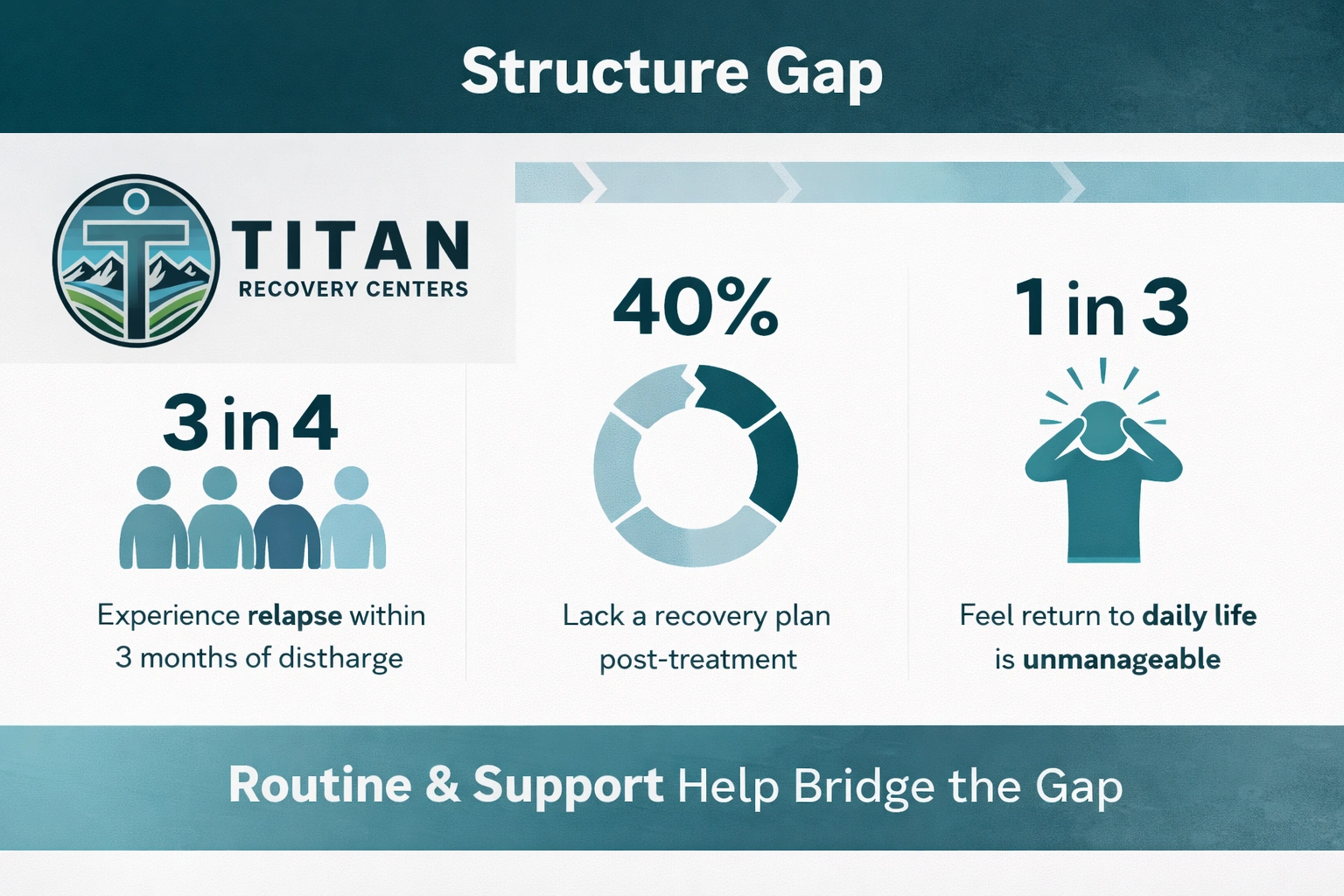
4. Ask: “What Happens After I Leave?”
It’s easy to focus on what happens inside a residential program. But the real test comes after.
Ask:
- Do you offer outpatient care after discharge?
- Are there alumni meetings or ways to stay connected?
- Do you help with job, housing, or reintegration planning?
Recovery doesn’t end when the doors close behind you. That’s when it really begins.
A great residential program will prepare you for that moment—not drop you into it unprepared.
5. Ask: “Can I Talk to a Former Client?”
You don’t have to take the marketing copy at face value.
Ask:
- Can I speak with someone who’s been through this program?
- Do you have alumni I can talk to?
- Can I hear a real recovery story—not just a polished pitch?
Even a short, anonymous conversation with a peer can tell you everything you need to know. How they describe the staff, the vibe, the emotional safety. Whether they still use the tools. Whether it felt real.
And if the program resists? That’s not a red flag—it’s a billboard.
6. Ask: “How Do You Handle Mental Health—Not Just Substance Use?”
Here’s a not-so-secret secret: most people seeking residential care have more going on than substances.
Maybe it’s anxiety. Trauma. Depression. ADHD. Burnout. Grief. Loneliness.
If the program only focuses on substance use without addressing the why underneath, it won’t hold. You’ll leave sober, but still suffering.
Ask:
- Do you offer dual diagnosis care?
- Is trauma therapy part of the program?
- Do your clinicians understand neurodivergence?
If they can’t answer clearly, keep searching. At Titan, we know that the substance is often the symptom—not the problem.
7. Ask: “Will This Program Respect My Identity and Story?”
You’re not a blank slate. You bring your whole life into recovery—your culture, faith, sexuality, gender, values, history.
You deserve care that honors that.
Ask:
- Do you serve LGBTQ+ clients with respect and safety?
- Is cultural or faith-based support available?
- How do you accommodate dietary or accessibility needs?
You are not too much. You are not too complicated. The right program will never make you feel that way.
8. Ask: “How Transparent Are You About Costs and Insurance?”
You’re allowed to ask about money. In fact, you should.
Ask:
- What does the program cost?
- Do you take my insurance?
- What happens if my coverage runs out mid-program?
A trustworthy program will be upfront, not evasive. And they’ll walk you through your options—not guilt you into decisions.
Looking for a Residential Treatment Program in North Las Vegas?
Titan Recovery Centers serves clients from across the region with one mission: to offer treatment that meets you where you are.
Whether you’re burned out, curious, high-functioning but hollow, or just done pretending you’re fine, we’re here for the moment when your questions turn into action.
Call (888) 976-8457 or visit Residential Treatment Program in Las Vegas to ask real questions and get real answers—without pressure, pretense, or shame.
FAQs: Residential Treatment for the Sober Curious
Do I have to identify as an addict to go to treatment?
Not at all. Many clients are exploring sobriety or feeling stuck but don’t identify with labels. You’re allowed to be unsure and still seek help.
How long is a typical residential program?
Programs vary, but many range from 30 to 90 days. At Titan Recovery, we customize based on your clinical needs—not the calendar.
What if I’m high-functioning but struggling quietly?
That’s more common than you think. We support clients who are “doing okay” on the outside but feel numb, anxious, or overwhelmed inside.
Can I work or keep my phone during residential care?
Some programs offer professional accommodations or digital access. Ask directly—policies vary by program and individual needs.
What if I’m not ready to commit but want to learn more?
You don’t have to commit to ask questions. Call, text, or message us. We’ll walk you through what to expect, with zero pressure.