

You love them. That’s the part people don’t see.
They see the chaos. The broken promises. The tension in your voice.
They don’t see how hard you’ve been trying to hold this together.
Now they’re entering medical detox, and the first 72 hours feel like standing in the doorway of something fragile. You’re hopeful. You’re scared. You’re bracing yourself.
Let’s slow this down and walk through what those first three days actually look like—from a clinical perspective, but also from a human one.
If you want a full overview of how detox works, you can explore our medical detox program here. For now, let’s focus on what happens in those early hours.
What Happens in the First 24 Hours of Medical Detox?
The first day is about safety and stabilization.
When your partner arrives, we conduct a thorough assessment. This includes:
- Substance use history
- Current medications
- Physical health screening
- Mental health evaluation
- Risk assessment for withdrawal complications
This is not just paperwork. It’s a safety blueprint.
Depending on the substance, withdrawal symptoms can begin within hours. Alcohol, opioids, benzodiazepines, and stimulants all have different timelines and risk profiles.
In the first 24 hours, your partner may experience:
- Anxiety or agitation
- Nausea or gastrointestinal discomfort
- Sweating or chills
- Headaches
- Tremors
- Elevated heart rate
- Fatigue or insomnia
Some symptoms are uncomfortable but manageable. Others require close monitoring.
This is why medical detox exists. We monitor vital signs. We assess symptom severity. We may administer medications to ease discomfort or prevent complications.
It can look messy before it looks better. That doesn’t mean it’s failing. It means the body is recalibrating.
Is Withdrawal Dangerous?
This is often the question beneath all the others.
The honest answer: sometimes it can be. And that’s exactly why supervision matters.
Alcohol and benzodiazepine withdrawal, in particular, can carry medical risks such as seizures or severe autonomic instability. Opioid withdrawal, while typically not life-threatening, can be intensely uncomfortable and destabilizing. Stimulant withdrawal may involve profound depression or exhaustion.
In medical detox, we don’t “wait and see.” We anticipate.
Vital signs are checked regularly. Symptoms are scored using standardized clinical tools. Medications may be used to:
- Reduce seizure risk
- Stabilize heart rate and blood pressure
- Ease nausea and muscle aches
- Improve sleep
- Reduce anxiety
Think of detox like removing a powerful current from the body’s electrical system. You don’t just flip the switch and walk away. You regulate the flow.
Your partner is being monitored with intention.
What Emotional Changes Should I Expect in the First 72 Hours?
Withdrawal isn’t just physical.
Substances often function as emotional regulators. When they’re removed, feelings can surge back intensely.
In the first 72 hours, you might notice:
- Irritability
- Tearfulness
- Anger
- Guilt
- Shame
- Anxiety
- Emotional flatness
These reactions can be confusing for partners. One moment your loved one may express gratitude. The next, frustration or withdrawal.
This emotional volatility is common.
Their nervous system is recalibrating. Their brain chemistry is adjusting. The coping mechanism they relied on is gone.
It’s not uncommon for partners to think, “They seem worse.” In reality, they’re transitioning.
Emotions returning is not regression. It’s part of the process.
Will They Be Thinking Clearly?
In the early stages of medical detox, clarity fluctuates.
Some individuals feel foggy. Others feel hyper-alert. Sleep disruption can compound confusion or irritability.
By the end of the first 72 hours, many patients begin to experience subtle mental shifts:
- Improved concentration
- More coherent conversation
- Less reactive mood swings
- Increased awareness of consequences
It’s rarely dramatic.
Think of it like watching fog slowly lift from a windshield. Visibility improves gradually.
What If They Want to Leave?
Ambivalence is common in the first few days.
Withdrawal discomfort can trigger bargaining thoughts:
- “Maybe I wasn’t that bad.”
- “I can handle this on my own.”
- “This is too uncomfortable.”
This doesn’t mean detox was a mistake. It means the brain is accustomed to relief through substances.
In medical detox, part of our clinical role is helping patients tolerate that discomfort long enough for clarity to return.
Cravings rise and fall. Doubt spikes and softens.
Commitment doesn’t have to feel perfect in the first 72 hours. It just needs support.
What Is My Role During These First Three Days?
This is where partners often feel lost.
You may want to:
- Check in constantly
- Monitor symptoms
- Provide reassurance
- Fix things
But medical detox is a clinical process. Your role is not to manage their withdrawal.
Your role is to care for yourself while professionals handle stabilization.
That might look like:
- Attending family education sessions
- Asking direct questions
- Seeking counseling or support groups
- Allowing yourself to rest
You can love someone deeply without being their lifeline every second.
In fact, detox can be the first moment in a long time where you are not solely responsible for crisis management.
Why The First 72 Hours Matter So Much
The first three days of medical detox are about breaking a physiological cycle.
Substances create patterns in the brain’s reward system. They alter stress responses. They modify neurotransmitter balance.
The initial stabilization period allows:
- Neurochemical recalibration
- Physical safety
- Emotional observation
- Assessment for co-occurring mental health conditions
This phase often reveals underlying anxiety, depression, trauma, or mood disorders that were previously masked by substance use.
Detox creates space for clarity. And clarity informs next steps.
What Happens After 72 Hours?
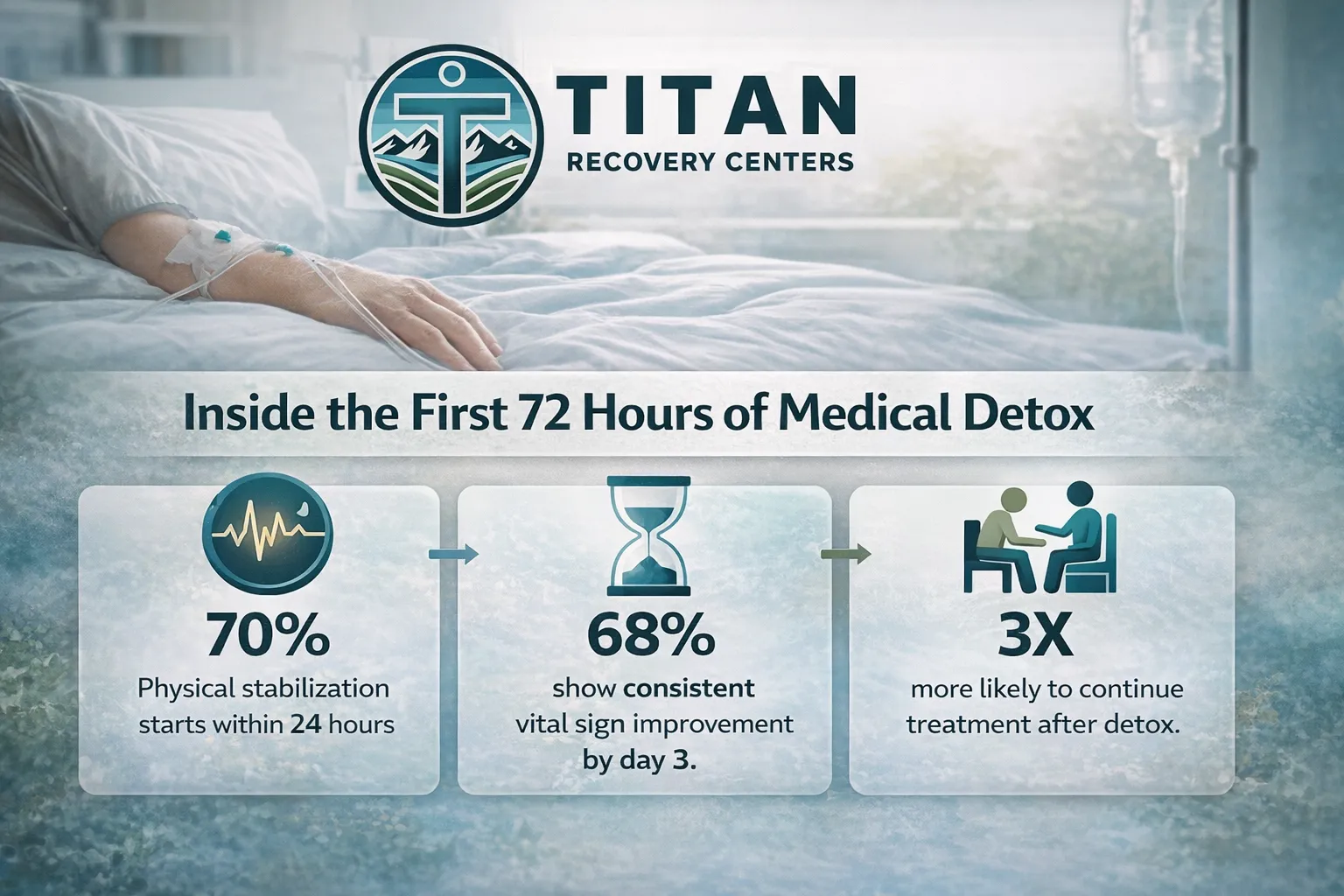
By day three, many patients experience:
- Reduced acute withdrawal symptoms
- More stable vital signs
- Improved sleep patterns
- Increased engagement in conversation
This doesn’t mean they’re “fixed.”
It means they are stable enough to consider ongoing treatment options such as:
- Residential treatment
- Partial hospitalization programs
- Intensive outpatient programs
- Individual therapy
Detox clears the body. Treatment rebuilds the life.
Without follow-up care, the risk of relapse remains high. With continued support, long-term recovery becomes possible.
What If I’m Still Angry?
You’re allowed to be.
Partners often carry layers of:
- Betrayal
- Financial stress
- Emotional exhaustion
- Fear of relapse
- Lingering mistrust
Medical detox doesn’t erase history.
But it can interrupt the cycle long enough for both of you to assess what healing might look like.
Hope and resentment can coexist. Love and fatigue can exist at the same time.
Your feelings do not invalidate their effort.
Is It Normal to Feel Relief?
Yes.
Some partners describe an unexpected sense of calm when detox begins.
Relief that someone else is monitoring them.
Relief that the unpredictability has paused.
Relief that you can sleep without waiting for an emergency.
Relief does not mean you stopped caring.
It means you’ve been in survival mode.
Medical detox often marks the first moment of shared responsibility between patient, clinician, and family.
How Do I Prepare for Their Return Home?
If detox is followed by residential or outpatient care, there will be transition planning.
We encourage partners to think about:
- Boundaries
- Communication expectations
- Triggers within the home
- Access to substances
- Shared accountability
The first 72 hours begin a process. They don’t complete it.
Recovery is sustained through structure, support, and honest conversations.
Frequently Asked Questions
How long does medical detox typically last?
Detox duration depends on the substance and severity of use. Many programs range from three to seven days, though some substances require longer monitoring.
Will they be medicated during detox?
Medications may be used to manage withdrawal symptoms or prevent complications. The goal is safety and stabilization, not sedation.
Can I visit during the first 72 hours?
Policies vary. Early stabilization sometimes limits contact to reduce stress and allow medical focus. Communication guidelines are typically explained during intake.
Is detox enough on its own?
No. Detox addresses physical dependence. Ongoing treatment addresses psychological and behavioral aspects of substance use.
What if they relapse after detox?
Relapse can occur, especially without continued treatment. Detox is a starting point. Sustained recovery requires ongoing support.
How can I support them without enabling?
Support involves encouragement toward treatment, clear boundaries, and accountability. Enabling often involves minimizing consequences or shielding them from impact.
A Final Word
The first 72 hours of medical detox are intense—but they are structured, monitored, and purposeful.
They are about safety.
They are about stabilization.
They are about creating space for something different.
You may not see dramatic transformation in three days.
But you may see the first signs of clarity.
And sometimes, that’s enough to begin.
If you have questions about whether detox is appropriate or what next steps could look like, Call (888) 976-8457 to learn more about our Medical Detox in Las Vegas.
