

You’re not dramatic. You’re depleted.
Not the loud, chaotic kind of broken. The quiet kind. The kind where you wake up already tired of fighting yourself.
If you’re reading this and considering medical detox, chances are you’re not looking for inspiration. You’re looking for relief. If you want the clinical overview, you can explore our medical detox program here. But first, let’s talk about what detox really offers the people who feel like they have nothing left to give.
When “I’m Done” Really Means “I Can’t Keep Carrying This”
We hear it all the time.
“I’m done.”
“I don’t care anymore.”
“What’s the point?”
But when we sit with someone long enough, we learn something important.
They’re not done with life.
They’re done with the cycle.
Done with promising to stop and not stopping.
Done with hiding.
Done with waking up ashamed.
Done with the mental tug-of-war.
Emotional exhaustion doesn’t mean you’ve lost hope. It means hope has been carrying too much weight.
Medical detox isn’t about pushing you to try harder.
It’s about giving you a break from the fight.
Medical Detox Is Not a Motivational Speech
If you’re burned out, the last thing you need is someone shouting, “You’ve got this.”
You’ve been “having this” for years.
Medical detox is not about hype. It’s clinical. Structured. Grounded in physiology.
When substances leave your system, your body goes through measurable changes. Heart rate. Blood pressure. Neurotransmitter shifts. Sleep regulation. Appetite correction.
This isn’t about willpower.
It’s about stabilizing a nervous system that’s been running in emergency mode.
For many people we serve—including individuals traveling from Henderson, Nevada and North Las Vegas, Nevada—the first real relief they feel isn’t emotional. It’s physical.
Their body stops racing.
And that changes everything.
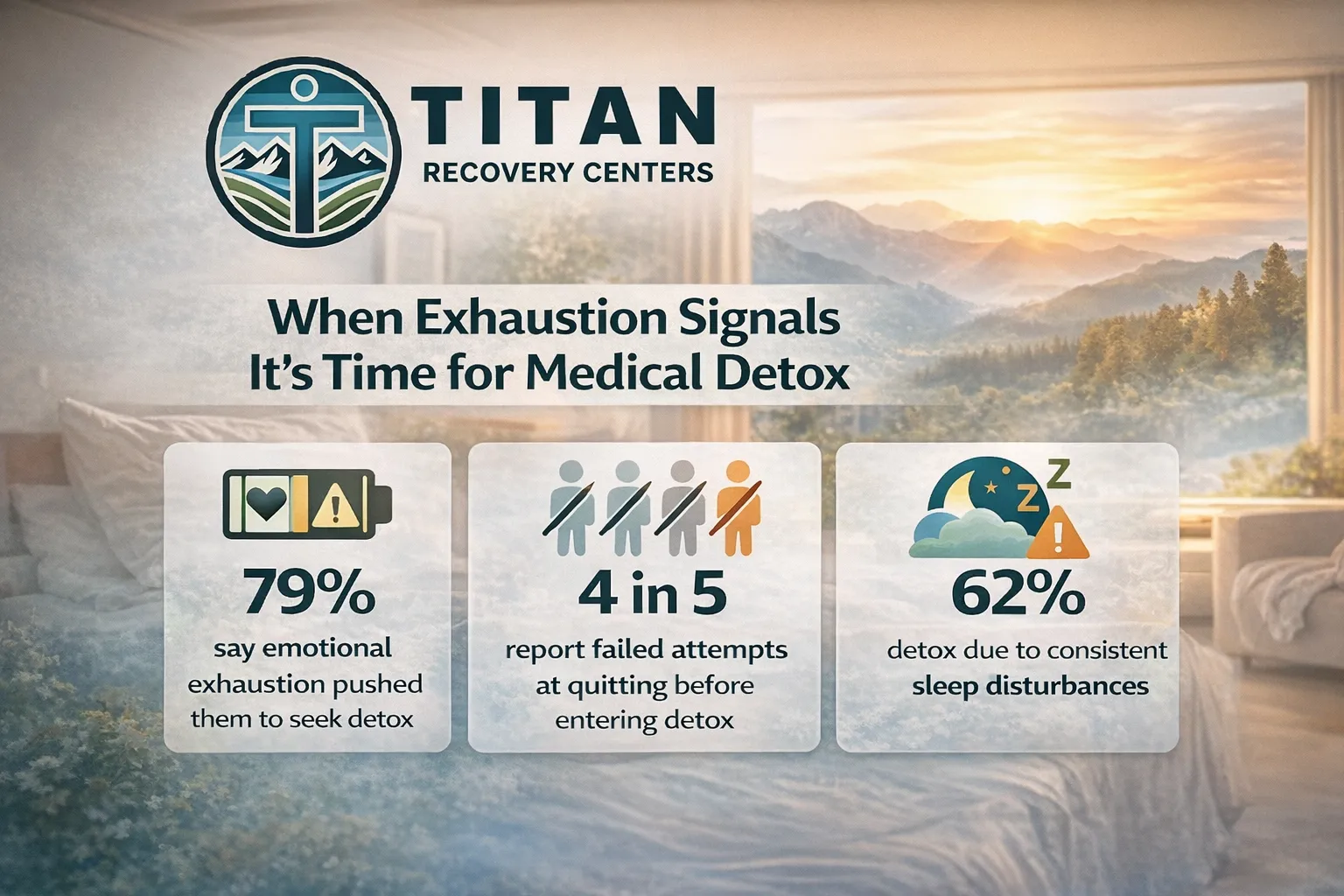
What Exhaustion Does to the Brain
Chronic substance use paired with emotional burnout creates a loop.
You feel overwhelmed.
You use to cope.
Your brain adapts.
You feel worse without it.
You use again.
Over time, your stress response system becomes dysregulated.
Sleep shortens.
Mood swings intensify.
Concentration weakens.
Motivation collapses.
When you say, “I’m tired,” you’re not being dramatic.
Your nervous system is overloaded.
Medical detox allows the brain to begin recalibrating. It reduces the chemical noise long enough for your thinking brain to come back online.
And when your thinking brain returns, options start to reappear.
The First 72 Hours: What Actually Shifts
In the first few days of medical detox, we focus on safety and stabilization.
Depending on the substance, withdrawal symptoms may include:
- Anxiety
- Irritability
- Nausea
- Sweating
- Restlessness
- Sleep disruption
- Mood swings
It can feel uncomfortable before it feels better.
But here’s what often surprises people:
By day two or three, there’s a subtle shift.
Not fireworks.
Just clarity.
They make eye contact.
They ask a question about next steps.
They sleep through the night for the first time in months.
When someone who hasn’t rested properly in years finally sleeps, that’s not small.
That’s a reset.
You Don’t Have to Be Inspired to Start
This is important.
A lot of people delay medical detox because they’re waiting to feel motivated.
You don’t need motivation.
You need stability.
We’ve had clients walk through our doors angry, flat, skeptical.
They didn’t believe detox would work.
They didn’t trust themselves.
But they were willing to sit still long enough to stabilize.
That was enough.
Medical detox does not require hope. It creates space where hope can return.
What Medical Detox Really Offers (Beyond Withdrawal Management)
Let’s strip this down to what detox truly provides.
Medical detox offers:
- Supervised withdrawal in a safe environment
- Medication management when clinically appropriate
- Monitoring of vital signs
- Protection against severe complications
- A structured setting away from triggers
It offers a pause.
A medically supervised interruption in the cycle.
For someone emotionally exhausted, a pause can feel like oxygen.
It’s not a life overhaul.
It’s breathing room.
A Pattern We See Again and Again
There’s a moment we witness often.
A person comes in guarded. Detached. Convinced they’ve failed too many times.
The first day is rough.
The second day is uncertain.
By the third day, something softens.
They’re not transformed.
But they’re present.
They start talking about their kids. Or their job. Or the hobbies they stopped doing.
The fog lifts just enough for them to remember who they were before survival mode took over.
Medical detox doesn’t invent a new person.
It removes what was clouding the original one.
Success Stories Don’t Always Look Dramatic
We don’t measure success in detox by grand speeches.
We measure it in quiet changes.
- A person who couldn’t go 12 hours without using makes it through 72.
- Someone who said “I don’t care what happens to me” asks about therapy options.
- A client who hasn’t eaten consistently finishes three meals in a day.
Those are not headline moments.
But they’re turning points.
Sometimes the biggest win is simply stabilizing enough to think clearly again.
The Myth of Rock Bottom
Many emotionally exhausted individuals believe they haven’t “hit bottom” hard enough to justify detox.
No arrest.
No public breakdown.
No catastrophic loss.
Just chronic depletion.
But bottom isn’t an event. It’s a threshold.
If you’re waking up already tired of your own coping mechanisms, that’s a signal.
Medical detox isn’t reserved for disaster.
It’s appropriate when stopping safely requires support.
You don’t have to implode to deserve help.
What Happens After Detox?
Detox clears the physical dependence.
It does not erase trauma, anxiety, depression, or relational strain.
After medical detox, we guide clients toward continued care such as:
- Residential treatment
- Partial hospitalization
- Intensive outpatient programming
- Individual therapy
Detox is stabilization.
Treatment is reconstruction.
If detox is clearing debris after a storm, treatment is rebuilding with stronger materials.
And when you’re emotionally exhausted, that first cleared space can feel like relief you forgot was possible.
If You’re Skeptical
We expect that.
Skepticism means you’ve tried before.
We don’t ask for blind trust.
We ask for willingness to stabilize your body under supervision.
Medical detox is not about surrendering your intelligence or autonomy.
It’s about protecting your physiology long enough for your decision-making to strengthen.
You don’t have to believe this will fix everything.
You just have to allow your body to reset.
For The Ones Who Feel Numb
Exhaustion doesn’t always look chaotic.
Sometimes it looks flat.
No tears. No anger. Just absence.
When substances leave your system, emotions can return gradually.
That may feel uncomfortable.
But feeling again is not regression.
It’s recalibration.
Numbness is often a protective response. Detox removes the chemical buffer. The nervous system relearns balance.
That balance is fragile at first.
But it’s real.
Frequently Asked Questions
Is medical detox painful?
Withdrawal can be uncomfortable, but medical detox is designed to manage symptoms safely and reduce risk. Medications and monitoring help ease the process significantly.
How long does medical detox last?
The length varies depending on the substance, duration of use, and individual health factors. Many detox programs last between three and seven days.
Do I need detox if I haven’t hit rock bottom?
You don’t need a dramatic collapse to qualify. If you experience withdrawal symptoms, strong cravings, or difficulty stopping safely, medical detox may be appropriate.
Will detox fix my life?
Detox stabilizes your body. It creates space for further treatment. Ongoing therapy and structured care address the deeper emotional and behavioral patterns.
What if I relapse after detox?
Relapse can happen, especially without continued treatment. Detox is the first step in a longer process. Recovery strengthens with ongoing support.
Do I have to feel ready?
No. Many individuals begin detox feeling unsure or emotionally flat. Stability can come before motivation.
A Final Word
If you’re emotionally exhausted, you don’t need a reinvention.
You need relief.
Medical detox offers:
Safety.
Stability.
Space.
It doesn’t demand that you be inspired.
It simply helps your body reset so your mind can breathe again.
And sometimes, when you’re done trying, breathing again is the first real step forward.
Call (888) 976-8457 to learn more about our Medical Detox in Las Vegas.
