

Coming back to treatment after a relapse can feel like walking back into a room where you think everyone remembers your worst moment.
Many alumni who return after 90 days or more of sobriety carry a quiet weight: shame, disappointment, and the fear that they somehow “blew it.” But something important often happens when people return to structured support and reconnect with Dialectical Behavior Therapy (DBT).
They discover that the tools they learned didn’t disappear.
They were simply waiting to be used again.
At Titan Recovery Centers, alumni who revisit treatment often begin reconnecting with the same emotional skills that once helped stabilize their lives.
Recovery rarely moves in a straight line. But every return carries experience—and sometimes a deeper understanding of the tools that truly help.
Why Many Alumni Return to DBT After Relapse
Relapse often brings a harsh inner voice.
People tell themselves things like:
“I should have known better.”
“I ruined everything.”
“I already had my chance.”
But recovery isn’t about proving perfection. It’s about learning how to respond when life becomes overwhelming.
That’s where DBT often becomes meaningful again.
Dialectical Behavior Therapy was originally developed to help people regulate intense emotions, manage distress, and build healthier relationships with themselves and others. For people in recovery, those skills often become a foundation for staying grounded when life gets chaotic.
When alumni return to treatment, they frequently rediscover that the same DBT tools they learned before still apply—sometimes even more clearly than they did the first time.
Experience changes how those lessons land.
Emotions Start Making More Sense the Second Time Around
During relapse, emotions tend to feel unpredictable and overpowering.
Guilt. Anger. Loneliness. Anxiety.
Many people describe feeling as though their emotions suddenly took over the steering wheel. DBT helps shift that experience by teaching something simple but powerful: emotions are signals, not commands.
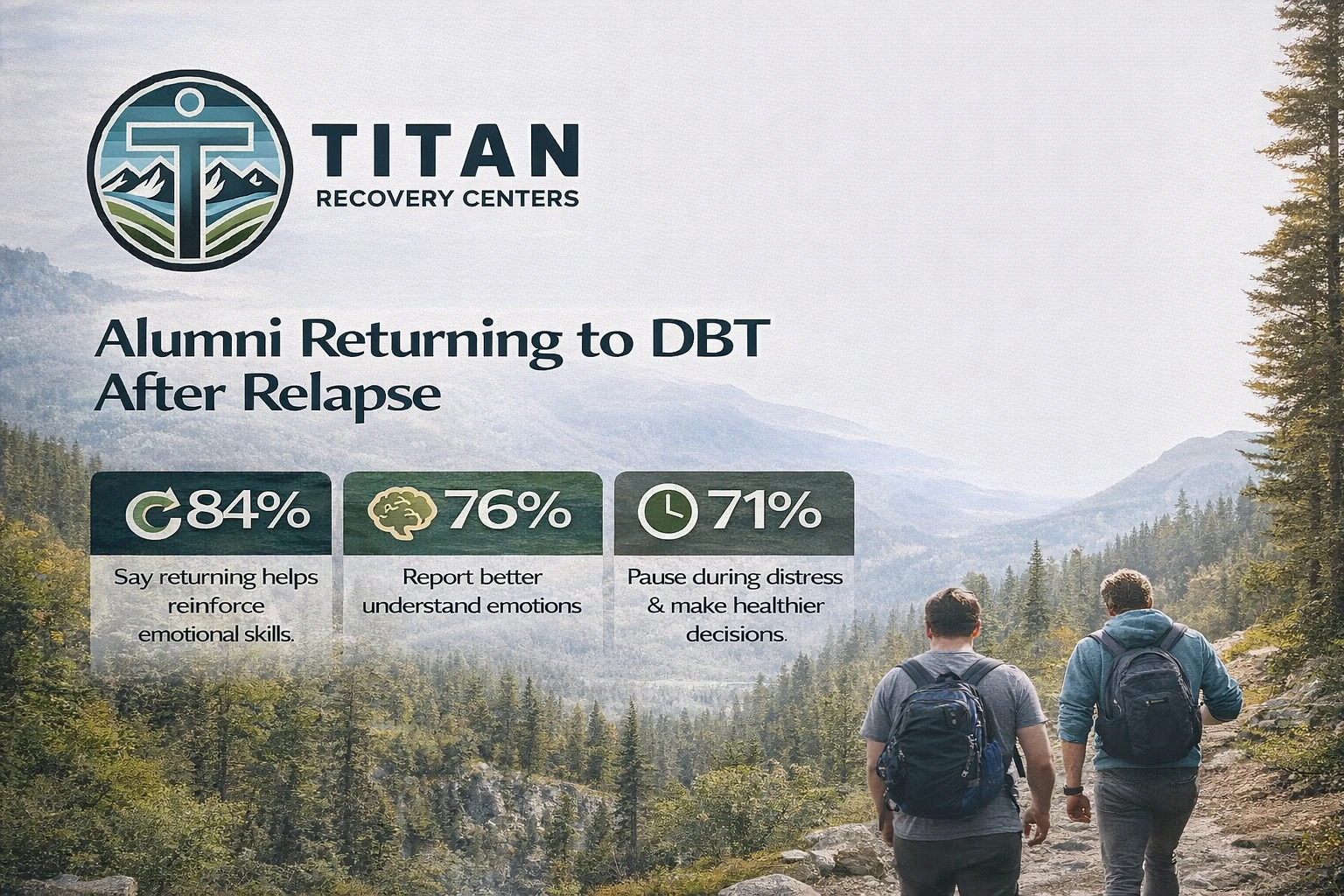
When alumni reconnect with DBT skills, they begin noticing their emotions rather than reacting immediately to them.
Instead of:
“I feel overwhelmed, so I need to escape.”
The internal dialogue slowly becomes:
“I feel overwhelmed. I need to pause.”
That pause may only last a few seconds—but it can change the direction of a moment.
And in recovery, moments matter.
The Small Mindfulness Skills People Often Forget
One of the most common things returning clients say is surprisingly simple:
“I stopped doing the little things.”
DBT places strong emphasis on mindfulness—not as a meditation practice alone, but as a daily awareness skill.
Mindfulness in recovery often looks like:
- Taking a breath before responding to a stressful message
- Noticing tension building in the body during conflict
- Recognizing racing thoughts before they spiral
These skills are subtle. They rarely feel dramatic.
But over time they become stabilizers.
When alumni return to treatment, they often rediscover that these small practices once helped them slow down their reactions to stress, cravings, and emotional triggers.
Like muscle memory, those habits often come back faster than expected.
DBT Helps Rebuild Self-Trust After a Setback
One of the deepest wounds relapse creates is the loss of trust in yourself.
Many returning alumni quietly believe they’ve proven something negative about who they are.
They may think:
“I’m the kind of person who can’t stay sober.”
DBT doesn’t try to erase that fear with positivity. Instead, it works by rebuilding confidence through repeated, manageable actions.
Clients begin practicing:
- Distress tolerance skills during stressful situations
- Emotional regulation strategies during mood swings
- Communication techniques in difficult relationships
Each time someone uses a skill instead of reacting impulsively, something important happens.
They rebuild evidence.
Evidence that they can respond differently.
Evidence that they can pause.
Evidence that progress is still possible.
Trust returns slowly—but it returns.
Why the Second Experience With DBT Often Feels Different
The first time someone learns DBT skills, the ideas can feel theoretical.
There are worksheets. Group discussions. Practice exercises.
But during real life, emotions sometimes move faster than learning.
When alumni return to treatment after relapse, they often approach the material differently. They now understand what happens when emotional stress piles up.
They’ve experienced the consequences of losing balance.
Because of that experience, the DBT skills begin to feel less like therapy exercises and more like survival tools.
Many alumni say something similar during their second experience:
“I didn’t realize how much those skills were helping me.”
The learning becomes personal.
Distress Tolerance: The Skill That Changes Hard Moments
One of the most important elements of DBT is distress tolerance.
Distress tolerance doesn’t eliminate painful situations. Instead, it teaches people how to move through them without making impulsive decisions that create more damage.
For returning clients, this skill often becomes critical during moments like:
- Conflict with family members
- Unexpected emotional triggers
- Stress at work or home
- Feelings of isolation
DBT teaches practical tools such as grounding techniques, sensory regulation, and short-term emotional stabilization strategies.
These techniques don’t magically solve problems.
But they help people stay steady long enough to avoid making choices they’ll regret later.
Sometimes survival in recovery simply means staying present through the storm.
Relationships Often Improve With DBT Skills
Relapse doesn’t only affect the individual—it often impacts relationships.
Family members may feel confused. Friends may pull away. Conversations can become tense.
DBT includes a core skill set called interpersonal effectiveness, which helps people communicate clearly, set boundaries, and express needs without escalating conflict.
Returning clients often rediscover how helpful these skills can be in rebuilding trust with others.
Instead of reacting emotionally during difficult conversations, people begin practicing:
- Speaking calmly even when emotions run high
- Asking directly for what they need
- Accepting feedback without shutting down
These skills take time.
But many alumni say they notice improvements in relationships faster than they expected once they start using them consistently again.
Recovery Doesn’t Reset—It Evolves
One of the most damaging myths about relapse is the idea that everything has been erased.
But recovery rarely works that way.
When alumni return to treatment, they bring something with them that they didn’t have the first time: experience.
They understand their triggers more clearly. They recognize early warning signs faster. And they often know which coping strategies helped before.
DBT simply organizes those insights into a structure that helps people use them consistently.
Rather than resetting recovery, returning to treatment often deepens it.
Sometimes growth happens in layers.
Many Alumni Rediscover Hope Faster Than Expected
One surprising pattern many treatment teams notice is how quickly returning clients begin feeling hopeful again.
Not because things become easy.
But because familiar tools start working again.
Mindfulness begins calming the mind.
Emotion regulation skills help stabilize the day.
Distress tolerance helps people survive difficult moments.
Gradually, the sense of chaos fades.
And something steadier begins to take its place.
A quiet realization that recovery is still possible.
Real Progress Often Happens in the Quiet Moments
Recovery rarely looks dramatic.
More often, it shows up in small moments that don’t make headlines:
- Choosing to pause instead of reacting
- Walking away from an argument instead of escalating it
- Reaching out for help instead of isolating
These moments may seem small individually.
But over time, they create stability.
Many alumni eventually look back and realize that their recovery didn’t return through one big breakthrough.
It returned through hundreds of small choices.
Access to DBT Support in Nevada
Many individuals seeking continued emotional support through structured therapy programs explore treatment options in Nevada, where communities such as Henderson, Nevada and North Las Vegas, Nevada have become important locations for individuals pursuing mental health stability and recovery-focused care.
Programs that integrate DBT often provide structured environments where individuals can practice emotional regulation, distress tolerance, and interpersonal skills in supportive settings.
For returning alumni especially, having access to these structured therapy environments can help rebuild stability while reconnecting with skills that once helped them move forward.
Frequently Asked Questions About DBT for Returning Alumni
Is relapse common for people in recovery?
Yes. Many people experience at least one relapse during their recovery journey. While relapse can feel discouraging, it often becomes part of the learning process that strengthens long-term recovery.
Does DBT only work for people with certain diagnoses?
No. While DBT was originally developed to treat borderline personality disorder, it is widely used today for many mental health and recovery challenges. The skills focus on emotional regulation, stress tolerance, and communication—tools that benefit many people.
Can DBT still help if someone already learned it before?
Absolutely. Many returning clients find that DBT skills become more meaningful the second time around because they now understand how those tools apply to real-life challenges.
How long does it take to learn DBT skills?
DBT skills are typically taught over several weeks or months, but learning continues through practice. Like any skill, the more often someone uses it, the more natural it becomes.
What makes DBT helpful during emotional crises?
DBT teaches practical techniques designed to help people tolerate emotional distress without making impulsive decisions. These tools help individuals slow down reactions and stay grounded during difficult moments.
Do people have to be in treatment to use DBT skills?
No. Many DBT techniques can be practiced independently once someone learns them. However, structured therapy programs often provide guidance, support, and accountability that help reinforce those skills.
Recovery doesn’t disappear because of one setback. Sometimes it simply pauses, waiting for the right moment to begin again.
Call (888) 976-8457 to learn more about our Dialectical Behavior Therapy in Las Vegas, Nevada.
