

You Don’t Have to Be Ready for Everything—Just the First Few Days
You’ve thought about this for a while now.
Maybe in the quiet hours after a long night. Maybe on your lunch break when everything just felt like too much. You kept wondering: What would it even look like to get help? What happens if I walk into a treatment center?
It’s okay not to know. That unknown is part of what makes taking this step so scary.
But here’s the truth: The first 72 hours of a residential treatment program aren’t designed to overwhelm you. They’re built to help you land.
Not to fix everything right away. Not to rush you into groups or deep disclosures. Just to help your nervous system begin to feel safe—maybe for the first time in a long time.
If you’re considering treatment and your biggest fear is the beginning, this blog is for you.
Your Arrival: Gentle Grounding, Not Judgment
When you first arrive, everything in your body may scream to turn around. That’s normal.
You might feel anxious, numb, disoriented, or even angry. You might be grieving the version of yourself that always said, “I’ve got this.” You might be thinking: What if this doesn’t work? What if I don’t belong here?
That first interaction matters. At Titan Recovery Centers, we’ve designed our admissions process to be trauma-informed, human, and unhurried.
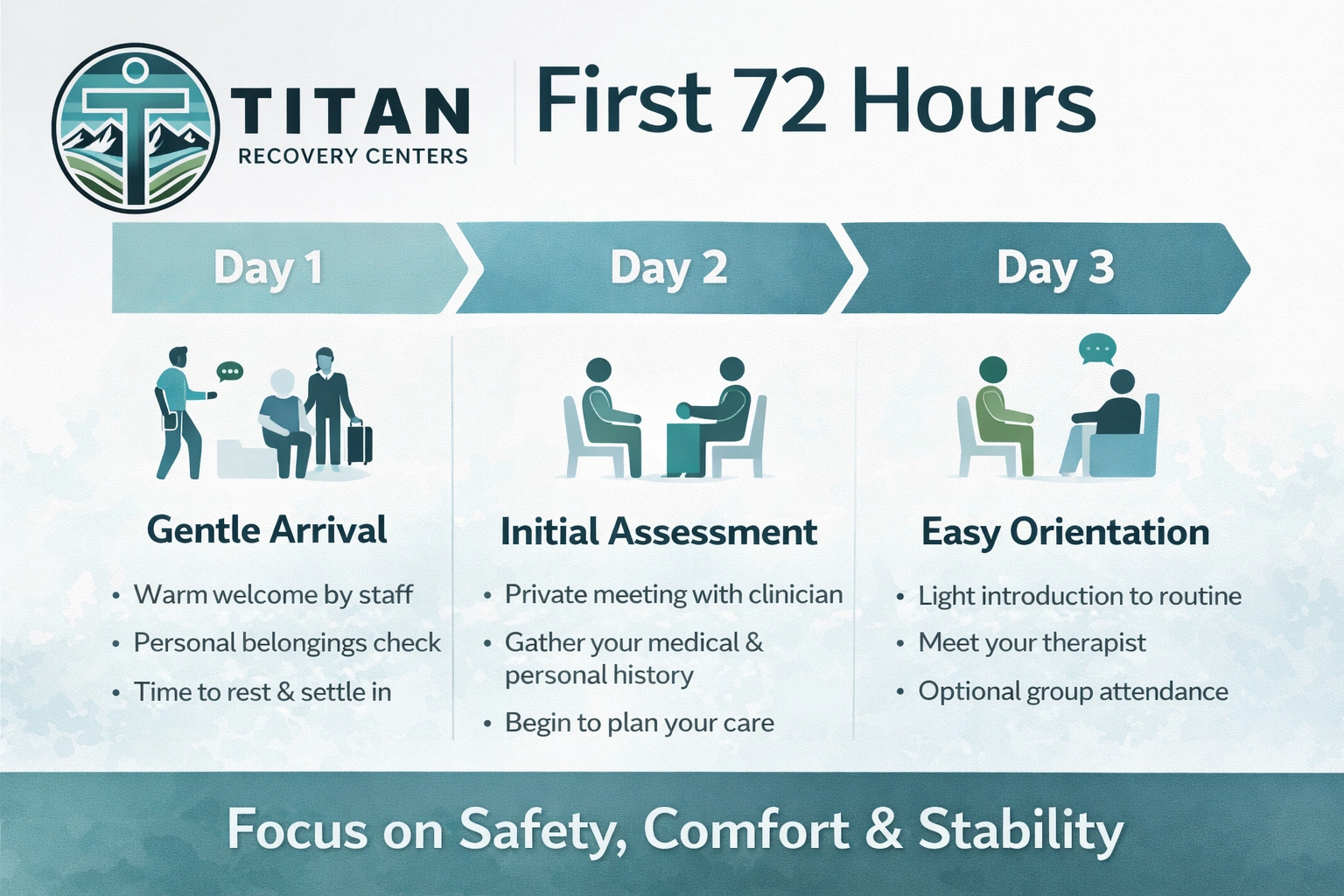
Here’s what typically happens in the first few hours:
- You’re greeted by staff who are expecting you—not strangers, not clipboard robots, real people.
- You’ll do a safe, respectful belongings check—just to make sure you’re not bringing anything harmful to yourself or others.
- You’ll be shown to your room and given time to breathe, nap, cry, shower—whatever your body needs.
If you’ve been searching for a residential treatment program in Henderson, NV, we can coordinate with families, outpatient providers, or even transportation partners to make arrival smoother.
Initial Assessment: Building a Picture, Not a Label
After you’ve had some time to settle, a nurse or clinician will meet with you privately to gather key information. This is not a courtroom or an interrogation. It’s a conversation—one meant to help us understand your unique story and what kind of care will help you most.
During this intake assessment, you’ll be asked about:
- Your substance use or mental health symptoms
- Any past diagnoses, trauma, or treatment
- Medical conditions, allergies, and medications
- Current withdrawal symptoms, if any
This helps us determine whether you’ll need medical detox (and how to manage it gently if so), and what supports you’ll need from day one.
There is no “wrong answer” here. Just real information that helps us keep you safe.
The First Night: Quiet Space to Just Be
One of the most surprising parts of entering a residential treatment program is that you’re not forced to “start working on yourself” immediately.
Your first night is about rest, not performance.
We know your brain and body may be adjusting to new surroundings, separation from substances, or just the emotional shock of making a real change.
That’s why your first night includes:
- Access to 24/7 medical staff if needed
- Optional sleep aids or detox meds (as prescribed)
- Quiet space with supportive check-ins, but no pressure to talk
Some people sleep deeply that first night. Others stare at the ceiling. Both are okay.
And if you’re coming in from nearby and looking for a residential treatment program in North Las Vegas, rest assured—our overnight care team is available and trained to meet you wherever your body and mind are.
Day Two: Gentle Orientation, Soft Openings
By day two, you’re no longer brand new—but you’re not expected to dive into deep emotional work either.
You’ll start getting oriented to the rhythm of the program:
- Light structure: meals, community times, optional groups
- A meeting with your assigned therapist
- Optional introductions to peers (if you’re ready)
This is your chance to observe, absorb, and ask questions. You can speak up—or just sit and listen. You can cry, sleep, journal, or even say nothing. There’s no “right” way to do this.
The point of day two is to begin replacing fear with familiarity.
Day Three: The First Flicker of Routine
On day three, your body might feel a little more at ease. You know when meals are served. You know who your therapist is. You know where the coffee is. You might even remember a few names.
This is often the day you’re gently invited to participate more fully. Not because you’re expected to be “ready,” but because you’re supported enough to try.
This might include:
- Joining a process group or skills group
- Having a full therapy session (1:1)
- Starting to explore your treatment goals
- Beginning to build trust—with yourself and the staff
You might feel hopeful. You might still feel shaky. Both are part of the process.
What We Don’t Do in the First 72 Hours
Let’s name a few things we won’t do during your first three days:
- Force you to share your “life story” in a group
- Expect emotional vulnerability right away
- Use shame or pressure to get you to open up
- Treat relapse, fear, or quietness as resistance
Your first 72 hours are sacred. They are the foundation of trust, safety, and stability.
We don’t want you to rush your healing. We want you to believe that healing is possible.
Local? You Have Options for Support Near Home
For those exploring treatment from within the Vegas metro, residential treatment options in Spring Valley, NV are available. Titan Recovery Centers serves people from across the region who are taking those first brave steps.
Whether you’re walking in from a hospital, a detox program, or your own apartment, you’ll be met with clarity and care—not judgment.
FAQs: Starting a Residential Treatment Program
Will I be drug tested when I arrive?
Yes, but not in a punitive way. Testing helps us make medical decisions, especially around detox and medication safety. We treat it clinically, not morally.
Do I have to detox before I can enter residential treatment?
Not always. If you’re actively using, you may begin a medical detox within our residential program. That’s part of what we’re here for.
Can I keep my phone during the first few days?
This depends on the program’s policy, but often phones are held during the initial stabilization period to help reduce external stress and focus on healing.
What if I’m scared to open up in groups?
That’s okay. You’ll never be forced to share before you’re ready. Many people observe silently at first—it’s part of how trust builds.
How do I know if I’m “sick enough” for residential care?
You don’t have to be at rock bottom. If daily life feels unmanageable, or if you keep thinking something has to change, that’s enough. We’re here to help figure out the rest with you.
Call (888) 976-8457 or visit Residential Treatment Program in Las Vegas to talk through what starting treatment could look like. No pressure. Just clarity.