

You’re not falling apart.
Not on the outside, at least. You still show up to work. You still meet deadlines. You still make people laugh. You still hold eye contact in meetings and say all the right things.
But something’s wrong. And you know it. Quietly. Constantly.
Maybe it started small—taking the edge off with a drink before bed, needing something to sleep, pushing through your day with a buzz or a pill. Then suddenly, the things you used to do with ease feel harder. The mornings come with tremors. The nights come with shame. And in the middle, you’re holding it together with muscle memory and caffeine.
Here’s what I’ll tell you as a clinician: the moment you realize you might need medical detox is the moment you still can choose.
Before your body makes that choice for you.
Before your life becomes unrecognizable.
Before everything falls apart.
High-Functioning Isn’t the Same as Safe
There’s a unique kind of denial that shows up in people who are still “doing well.”
They say:
- “I’m not an addict—I just need to reset.”
- “I’ve got too much going on to fall apart right now.”
- “If I were really in trouble, I wouldn’t be functioning this well.”
But here’s what your liver, your nervous system, your heart, and your brain know:
Performance is not protection.
You can file spreadsheets with withdrawal symptoms humming beneath your skin. You can attend your kid’s recital with alcohol still in your bloodstream. You can crush a sales pitch while craving the thing that’s quietly unraveling your health.
I’ve treated attorneys, nurses, CEOs, teachers, single parents, engineers, and service workers—people who functioned all the way into the ER.
The Tipping Point Isn’t Always a Crisis
People think needing detox looks like an overdose, a DUI, or waking up in a jail cell.
But for high-functioning people, it’s usually quieter.
It’s the moment you realize:
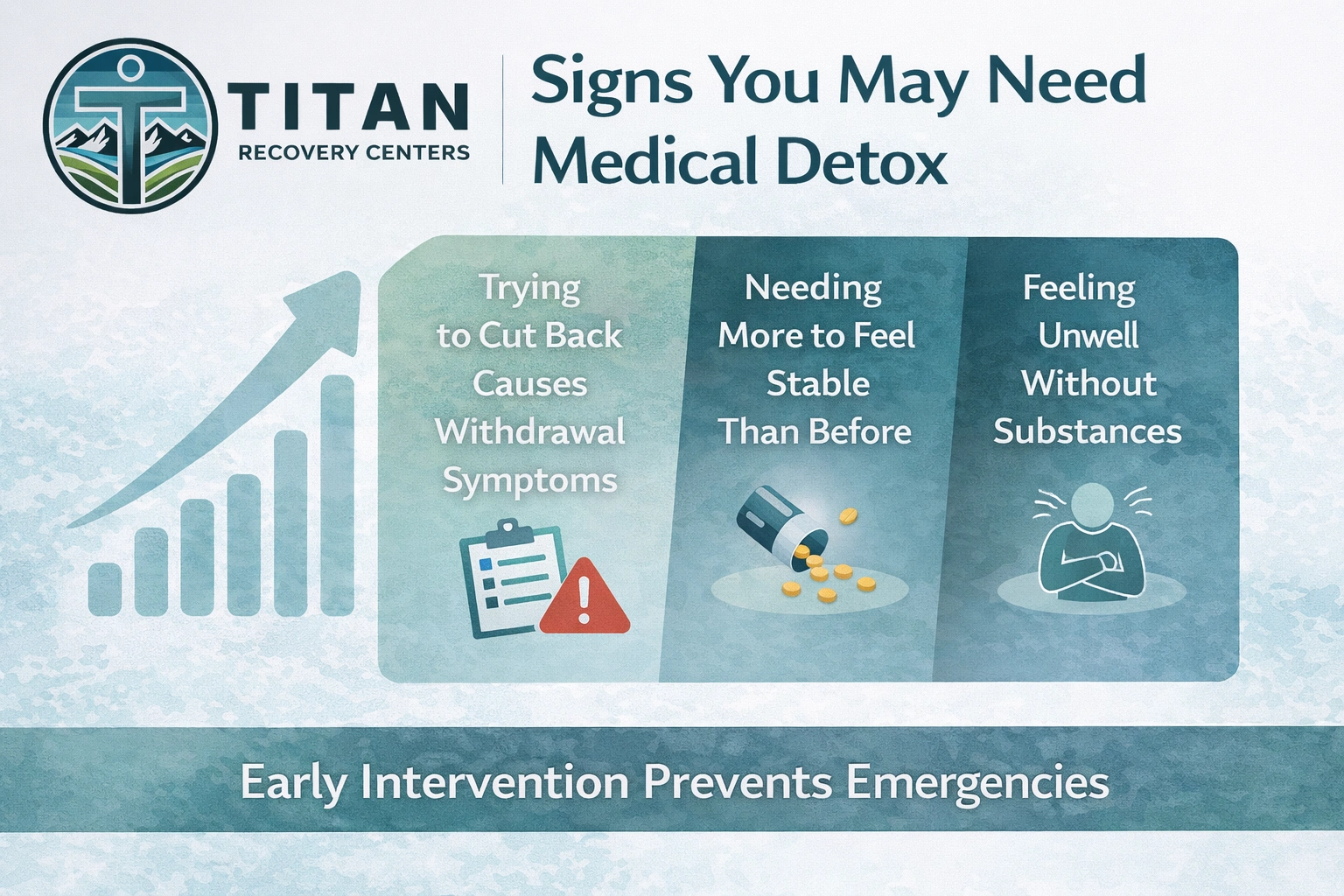
- You don’t feel “normal” unless you’ve had something.
- You need more than you used to just to feel stable.
- You’ve tried to cut back, and your body revolts.
- You wake up anxious, shaky, or sick without it.
- You’ve mapped out your whole day around when you can use.
That’s the point. Not where it’s all “over.”
But where your body has stopped asking and started depending.
Why You Can’t “Willpower” Your Way Out
This part is critical.
Withdrawal is not about weakness—it’s about biology.
When you’ve been using a substance long enough, your body adapts. It learns how to survive with the substance. And when it’s gone, that same body panics. Hard.
Without medical support, withdrawal can trigger:
- Dangerous blood pressure spikes
- Seizures
- Heart complications
- Hallucinations
- Severe insomnia and panic
Medical detox isn’t about hand-holding. It’s about keeping you safe while your body relearns how to function without depending on the thing that’s quietly killing it.
And no—tapering at home isn’t the same.
What Medical Detox Actually Looks Like
People imagine hospital beds, locked doors, harsh lights, and shame.
That’s not how we do things here.
At Titan Recovery Centers in Las Vegas, detox is:
- Medically supervised, 24/7
- Private, trauma-informed, and quiet
- Personalized based on what your body needs
- Designed to minimize discomfort and risk
- Grounded in dignity—not discipline
You’ll rest. You’ll hydrate. You’ll be monitored with compassion, not condescension. And when your body is clear enough, we’ll help you decide what comes next—whether that’s inpatient treatment, outpatient support, or another option.
If you’re already looking at medical detox in Las Vegas, we can talk you through what that plan could look like for you—no pressure, no panic.
The Real Cost of Waiting
Here’s what I’ve seen happen when high-functioning people wait too long:
- They miss early signs because they “can still work.”
- They end up needing emergency care because they didn’t get safe detox.
- They damage their careers more by hiding it than by seeking help early.
- They lose trust with their family—not because they struggled, but because they pretended they weren’t.
Waiting feels safe in the short term.
But the cost almost always comes due—with interest.
You Don’t Have to “Hit Bottom” to Need Help
One of the most damaging myths in recovery is the idea of “rock bottom.”
Bottom isn’t a requirement.
Bottom is just what happens when people keep going long past the point they should’ve stopped.
You don’t need to lose your job, your kids, your health, or your mind to qualify for care.
You just need to feel that this is no longer working.
That’s enough. That’s valid. That’s worthy of medical care.
If you’re asking, “Do I need detox?”—that’s not weakness. That’s the part of you that’s still alive, still paying attention, still reaching for something better.
What Happens After Detox?
Another hesitation I hear: “If I go to detox, they’ll make me go to rehab forever.”
Here’s the truth: detox is a beginning, not a trap.
Yes, many people transition into a treatment program after detox—but not because they’re forced. It’s because they finally feel clear enough to want deeper healing.
But it’s still your choice. And we’ll walk through all your options with you, not for you.
At Titan, we offer both detox and full residential care. If you want continuity, we’ve got it. If you just need a safe place to stabilize, we’ll support that too.
A Clinician’s Final Word
I know what this moment feels like.
You’re afraid to stop. But you’re more afraid of what happens if you don’t.
You’ve Googled “symptoms of alcohol withdrawal.”
You’ve calculated how many days you could miss work if you had to.
You’ve promised yourself: Monday. Next month. After the holidays.
I’ve heard it all. And I’ve watched what happens when people wait too long.
You don’t need to lose more to qualify for relief. You just need to want to feel safe again.
You just need to listen to the part of you that’s already whispering: Please… not like this anymore.
Call (888) 976-8457 or visit Medical Detox Program in Las Vegas to talk with someone who sees the whole you—not just the part that’s been holding it together.
You’re not broken. You’re just carrying too much alone. Let’s change that.
FAQs: Medical Detox for High-Functioning People
Do I really need detox if I’ve never blacked out or overdosed?
Yes. Detox is about dependency and withdrawal risk—not drama. You can need detox even if your use has been quiet or “controlled.”
Can I work during medical detox?
Usually no, and that’s a good thing. Detox is short-term, but intensive. Your body and brain need space to rest, regulate, and reset safely.
Is detox the same as rehab?
No. Detox is focused on physical stabilization. Rehab (residential treatment) focuses on emotional healing and long-term recovery support.
Will I lose my job if I go to detox?
FMLA and medical leave protections exist for this exact reason. We can help you explore your options confidentially.
What’s the difference between home detox and medical detox?
Home detox is risky—especially with alcohol, benzos, or opiates. Medical detox provides 24/7 monitoring, medication support, and safety from complications.
